A cardboard box is something we use all the time. You have probably seen them when getting deliveries, packing for a trip, or even organizing your toys.
However, these boxes are containers made from a type of material called corrugated cardboard. This material consists of layers of paperboard or Kraft paper, often with one or more wavier (corrugated) layers in between for added strength.
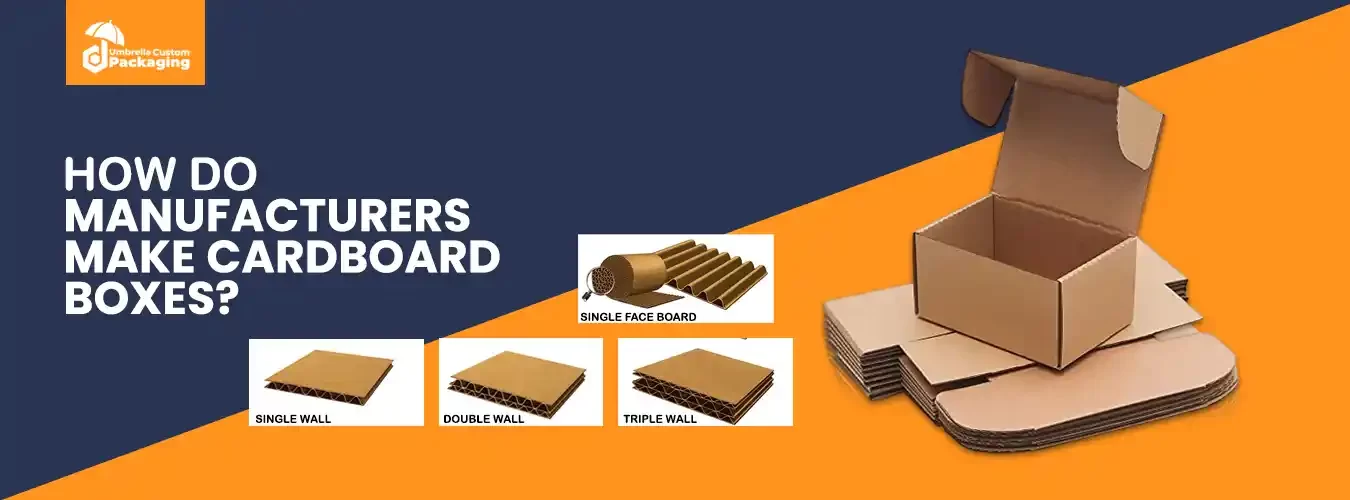
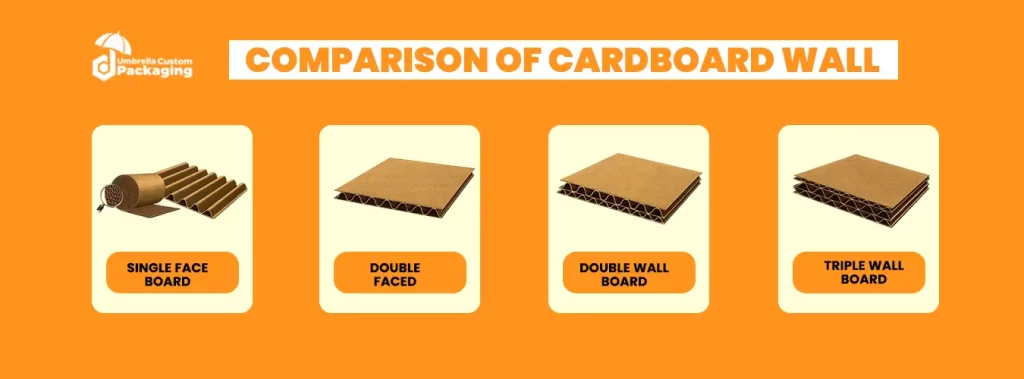
We commonly use these boxes for shipping, storing, and packaging goods, offering a lightweight yet durable option for protecting products during transport. Moreover, they are available in various sizes and types, such as single, double, or triple-wall boxes, which offer different levels of protection depending on the number of layers of material used.
First, let us talk about where cardboard comes from. The process starts with trees. Trees have fibers called cellulose that are perfect for making paper. Factories also use recycled paper from old boxes, newspapers, or packaging. The trees or recycled paper are turned into a wet, mushy material called pulp. This pulp is the base for making paper.
Next, the manufacturers spread out the pulp into thin sheets to make paper. Giant machines roll and dry the sheets until they become strong and smooth. These paper rolls are sometimes thin, like what you use in school, but for cardboard, the paper needs to be thicker and sturdier.
These boxes are not just made of one layer of paper. We make them from three layers:
The wavy layer is what makes cardboard strong but light. To create it, factories use machines called corrugators. These machines heat and press the paper to give it its wavy shape. Then, we use glue to sandwich the wavy layer between the two flat layers.
Once you glue these three layers together, they create corrugated cardboard.
Now that the cardboard is ready, it’s time to turn it into box shapes. Then, send large sheets through machines that cut them into specific sizes.
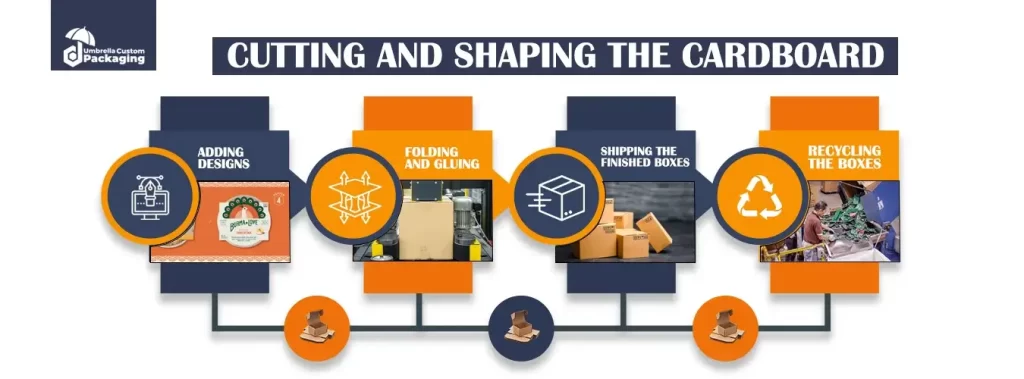
Before folding the box, some companies enhance its appearance. They print logos, brand names, or colorful pictures directly onto the cardboard. As a result, the packaging becomes more attractive and visually appealing. For example, a box for a toy company might have bright, fun images printed on it to attract kids.
Now comes the magic moment! First, machines fold the cardboard along the scored lines, turning the flat pieces into actual box shapes. Next, workers glue or tape the edges together.
Some boos are left flat at this stage so they can be stored or shipped easily. They will fold the boxes into shape only when they are ready to use them.
Once workers make the boxes, they pack and send them to stores, factories, or homes. We use these boxes to carry everything from books to snacks to electronics. In addition, they protect the items inside and make transportation much easier.
Here’s something cool: these boxes can be recycled! After a box has been used, you can put it in the recycling bin instead of throwing it away.
Here’s how recycling works:
1. Take the box to a recycling center.
2. Next, it’s shredded into tiny pieces and turned back into pulp.
3. Then, use the pulp to create new paper or cardboard.
In the end, this process saves trees, reduces waste, and helps protect the planet.
| Type of Wall |
Structure |
Strength |
Weight |
Common Uses |
| Single Face Board |
1 flat layer + 1 wavy layer |
Low to Medium |
Light-weight |
Lining inside boxes, protective wrapping for fragile items. |
| Single Wall Board |
2 flat layers + 1 wavy layer |
Medium |
Light to medium |
Shipping, storage, retail packaging. |
| Double Wall Board |
2 flat layers + 2 wavy layers |
High |
Medium |
Electronics, appliances, long-distance shipping. |
| Triple Wall Board |
3 flat layers + 3 wavy layers |
Very High |
Heavy |
Industrial machinery, bulk goods, heavy-duty packaging. |
These boxes are amazing because:
First, they are lightweight yet strong, making them easy to carry and reliable.
Additionally, they can be recycled, which is great for the environment. Moreover, cardboard boxes are versatile you can use them for packing, storing, creating, and even playing!
The type of box you choose depends on what you need. These boxes come in various types, each designed to meet different packaging, storage, and transportation needs. For example, Umbrella Custom Packaging offers a wide variety of customizable boxes for different uses, including custom Kraft corrugated boxes, presentation boxes, and cosmetic boxes. Here are the most common types of these boxes:
Die-cut boxes are customized into unique shapes and sizes using die-cut machines. They are often used for retail packaging, product displays, and promotional purposes, such as shoe boxes, gift boxes, and custom packaging.
Similarly,corrugated trays are open boxes with low walls, used for displaying products or storing lightweight items such as fruit trays, bakery trays, and beverage holders.
In contrast,telescopic boxes consist of a base and a lid that fits over it, allowing the lid to slide to adjust the height. Moreover, we often use them for packing long or irregularly shaped items, like picture frames, fishing rods, and telescopes.
Furthermore,archive boxes are sturdy boxes with lids designed for storing documents and files, often with handles for easy carrying, and used for office or home organization, such as filing boxes for papers, photos, or magazines.
On the other hand,folding cartons are lightweight boxes made from a single sheet of cardboard that folds into shape, commonly used for retail packaging, such as cereal boxes, gift boxes, and cosmetic packaging.
Finally, postal boxes are small, lightweight boxes designed for mailing items safely, perfect for shipping small or medium-sized goods like subscription boxes, e-commerce packaging, and small parcels.
In conclusion, cardboardboxesare made from layers of paper and a wavy layer in the middle to give them strength and lightness. The process starts with pulp, made from trees or recycled paper, which is turned into sheets and formed into corrugated cardboard. This is then cut, printed, and folded into different shapes and sizes for packing and shipping.
There are various types of boxes, such as single-wall, double-wall, and heavy-duty boxes, each suited for different uses. These boxes are not only useful and versatile but also recyclable, making them an eco-friendly option for packaging.
Umbrella Custom Packaginghas a lot of experience in making strong, eco-friendly, and biodegradable cardboard boxes. They specialize in creating boxes that are both durable and good for the environment, using sustainable materials. We design these boxes to safely pack and ship products while reducing waste. With a focus on quality and environmental responsibility, they offer packaging solutions that meet the needs of businesses looking for reliable and green options.
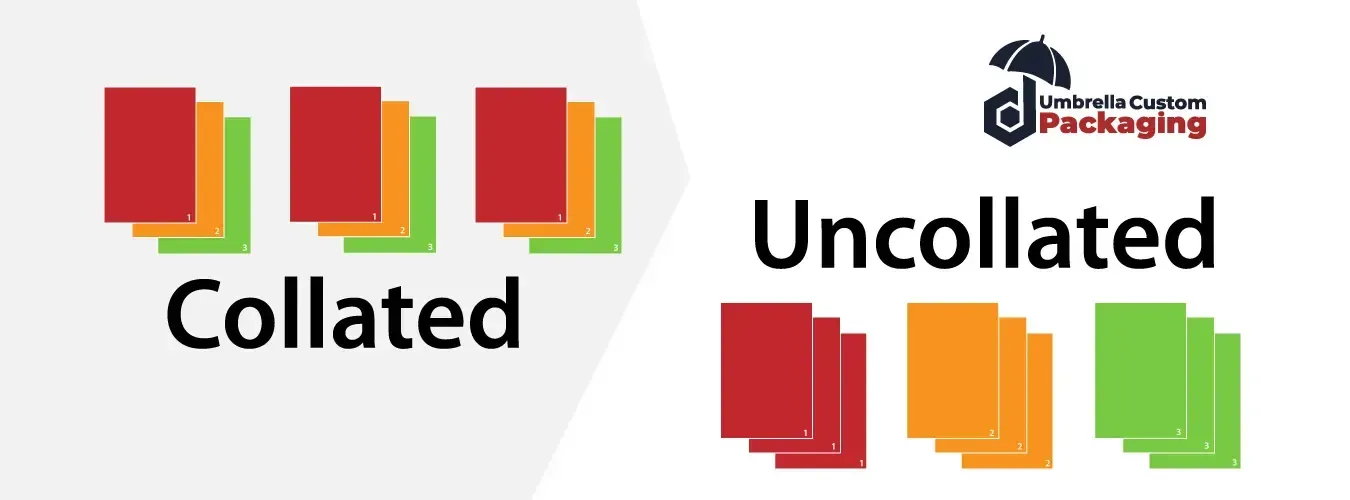
Collate simply means the printer automatically sorts your pages into complete sets for you. When you print multiple copies of a multi-page document with collate turned on, the printer prints one full copy (like pages 1 through 5 in order), then prints the next full copy, and so on.
Without collate the printer would print all copies of page 1 first, then all copies of page 2, forcing you to manually sort and assemble each set yourself.
Collate simply means the printer arranges your pages into complete sets for you. For instance, if you need three copies of a five-page report and you select collate the printer will print one full set of pages 1 through 5, then another full set, and then a third full set.
This way, you get perfect stacks you can use right away. On the other hand, if you do not select collate the printer will print three copies of page 1 first, then three copies of page 2, and continue like that until the end, so you will have to gather and arrange the pages into the correct order yourself.
You need to print 3 copies of a 3-page document (Page 1, Page 2, Page 3).
The printer creates each copy as a finished set:
Set 1: Page 1 → Page 2 → Page 3
Set 2: Page 1 → Page 2 → Page 3
Set 3: Page 1 → Page 2 → Page 3
Result: You get 3 complete stacks you can use immediately.
The printer groups all identical pages together:
All Page 1’s: Page 1 → Page 1 → Page 1
All Page 2’s: Page 2 → Page 2 → Page 2
All Page 3’s: Page 3 → Page 3 → Page 3
Result: You have to manually sort and assemble each set yourself.
Collate printing simply means arranging and printing multiple items together as one complete set. In the packaging industry, this process groups individual products into a single bundle with printed wrapping.
First, collate printing helps make variety packs. For example, it wraps 24 beer cans together in one printed plastic cover. As a result, this saves money and cuts down on waste.
Additionally, companies print nice pictures and logos on the wrap. Consequently, products look good on store shelves ,and this helps brands get noticed.
Furthermore, collate printing handles big orders fast and without mistakes. For instance, when a store chain needs different packs for each location, machines sort everything correctly without slowing down.
Finally, these machines print, pack, and get orders ready to ship all in one go. Therefore, this cuts down on manual work and makes sure the right products reach the right places every time.
Here is the difference between collated and uncollated printing.
Collate Printing | Uncollated Printing |
The printer prints each complete set one after another. | The printer prints all copies of each page together. |
You get finished stacks right away. | You get piles of the same page and must assemble them yourself. |
This method saves you time because you do not have to sort anything. | This method saves the printer time, but you have to do the extra work of sorting. |
It is best for handouts, reports, or booklets. | It is best for things like flyers or forms where you keep pages separate. |
Companies use collated printing for reports. For example, when they get ready to share quarterly reports with board members, collation gives each person a complete set with pages in the right order. This saves time during meetings and makes everything look neat and professional.
Companies also use collated printing for employee handbooks. When they print fifty copies of a twenty-page manual, collation creates fifty booklets that are ready to use. So new workers get complete guides with no pages missing.
Teachers use collated printing for tests and course packs. This way, each student gets a full set of papers at once and does not have to wait for someone to sort the pages.
Weddings and conferences use collated printing for their programs. Guests then get booklets that go in order from cover to cover without needing to put them together themselves.
Businesses make catalogs and small magazines using collated printing. The printer takes care of the entire page sorting, so the finished booklets come out ready to hand out.
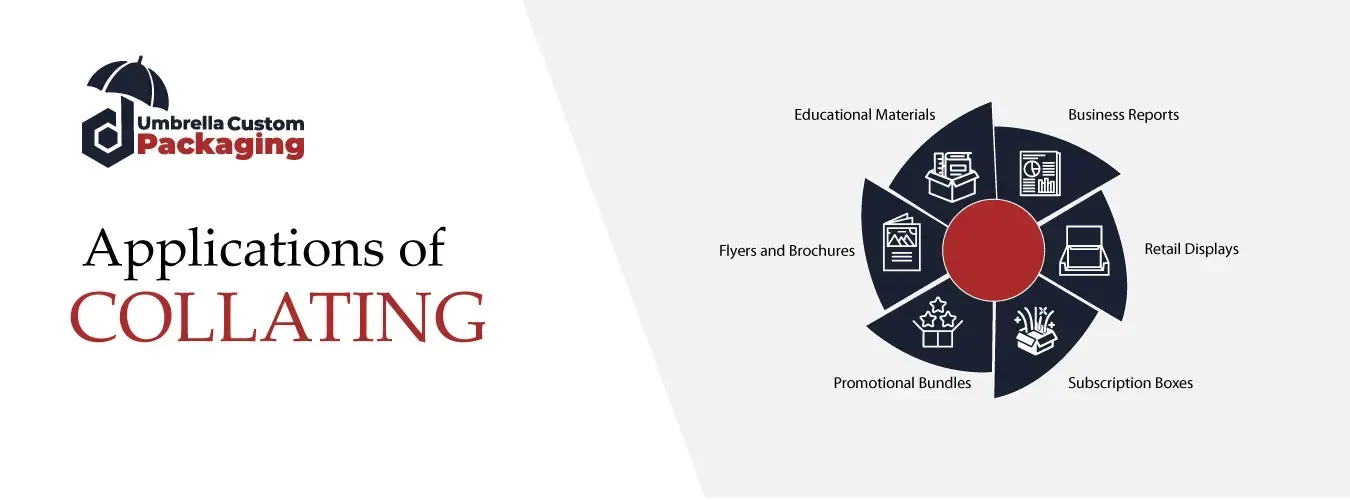
Variety Packs
Collate printing works great for variety packs. For instance, snack companies bundle different chip flavors together in one printed bag. Similarly, beverage companies combine various drinks into single multi-pack wraps.
Promotional Bundles
Businesses use collation for special offers. A coffee brand might bundle different roasts together with printed sleeves. This encourages customers to try more products.
Sample Packs
Cosmetic and food companies use collation for sample packs. They group multiple small products together with printed information. Therefore, customers can test several items at once.
Subscription Boxes
Monthly subscription services rely heavily on collation. They assemble unique product combinations for each subscriber. Additionally, they print custom packaging and ship complete sets without manual sorting.
Retail Displays
Stores receive pre-collated product bundles ready for shelves. This means employees simply open boxes and place multi-packs directly on display without extra work.
Our Expertise in Collated Printing
At our company, we use collated printing every day. We manufacture all kinds of custom products, including packaging boxes, brochures, cups, banners, displays, stickers, and labels. Collation helps us assemble multi-page brochures in the correct order so they arrive ready for your customers.
Similarly, when we create user manuals for product boxes, collation guarantees each package contains the right pages. Additionally, for promotional bundles like custom cups with printed sleeves or banner sets, collated printing ensures every piece matches perfectly.
Our clients receive professional, organized products without any sorting hassle. In short, collation helps us deliver accuracy and quality in everything we make.
Final Thought
In short, collate printing makes it easy to put multi-page papers in good order. Whether you print school projects, books, or product boxes, collation keeps everything neat and ready to use. Using this option saves time, reduces mistakes, and gives you tidy results with every print job. So next time you print many copies, just let the printer do the sorting for you, it is the smart choice.

The dimensions and design of a tissue box serve as a silent salesperson, directly capturing customer attention and influencing the crucial moment of purchase. Therefore, selecting the right size is about much more than simple measurements. It is a strategic choice that balances essential functionality with aesthetic appeal.
Ultimately, the correct proportions not only ensure the box works well but also enhance the visual harmony of any space it occupies. Here is the complete guide regarding the tissue box dimensions.
The most common standard tissue box size, often called a facial tissue cube, measures approximately 4.5 inches in width, 9 inches in length, and 5 inches in height. We designed this rectangular shape to fit most decorative tissue box holders for home use.
This makes it the default size you will find on most store shelves. While there are many variations, such as compact travel sizes or larger cube boxes, this 4.5” x 9” x 5” dimension is the industry standard for regular household tissue boxes.
Here is a clear and simple flow chart diagram to help you visualize measuring a tissue box systematically. Ultimately, this flowchart breaks down the process into two main steps: measuring the main box and measuring the opening and guides you smoothly to the final goal of finding the perfect fit.

Tissue boxes come in a few standard shapes, each with its own practical and visual appeal.
This is the classic and most popular shape. A rectangular box is longer than it is wide. This elongated design fits perfectly on narrow ledges, like a windowsill or the back of a toilet tank, and it feels very familiar to hold.
Square boxes offer a neat, balanced, and modern appearance. Because all their sides are equal in length, they tuck very neatly into square holders or the corner of a counter without sticking out awkwardly.
A cube box takes the square shape and adds significant height, creating a sturdy, substantial feel. However, this design maximizes capacity, allowing the box to hold a larger number of tissues, which is ideal for high-traffic areas.
Oval & Round Boxes
These shapes are primarily decorative. An oval or cylindrical box provides a soft, elegant look that can elevate the style of a living room or bedroom. In addition, their curved design usually requires a matching holder or a stable surface to prevent them from rolling.

In this table, we will discuss common tissue box dimensions based on their primary shape. Dimensions can vary by brand and design.
Shape | Typical Dimensions (Length x Width x Height) |
Rectangular | 9 inches x 4.5 inches x 5 inches |
Square | 5 inches x 5 inches x 5 inches |
Cube | 5.5 inches x 5.5 inches x 5.5 inches |
Oval / Cylindrical | Diameter: ~4.5 inches, Height: ~ 5 inches (varies) |
Several important factors determine the final size and shape of a tissue box.
1. Purpose & Placement
The size of a tissue box depends on where and how it will be used. For instance, we make small travel boxes to fit easily in bags, and decorative boxes for living rooms are often bigger or have a special shape. Likewise, boxes designed for cars or desks are slimmer so they can fit into tighter spots.
The number of tissues inside and how they are folded directly decide the box’s volume. A higher tissue count requires a taller or wider box. In addition, pop-up tissues need a certain height to function, while flat C-fold tissues allow for shorter box designs.
Branding and visual appeal play a big role. Often, luxury brands use cube or oval shapes for a premium look, while standard brands stick to efficient rectangles. Furthermore, unique designs for holidays or events may use non-standard dimensions to stand out.
How boxes are shipped and sold affects their size. Manufacturers often design boxes to fit efficiently on store shelves and in shipping cases. Therefore, a standard dimension has become common because it optimizes logistics and display.
In short, tissue box dimensions are a balance of function, content, style, and logistics.
At Umbrella Custom Packaging, we design and create custom tissue boxes that go beyond the ordinary. We turn your vision into a tangible product that adds style, personality, and purpose to any space.
Branded Tissue Boxes: We print your company logo, colors, and message on high-quality boxes, turning everyday items into effective marketing tools.
Event & Wedding Tissue Boxes: However, we create beautiful designs to match your theme, color palette, or special date, adding a thoughtful touch to your celebration.
Personalized Gift Boxes: Moreover, we help you design unique boxes for birthdays, holidays, or housewarmings that feel personal and special.
Bespoke Designs: From shape to finish, we work with you to create a completely custom look that stands out.
Choosing the right size is not just about numbers: it is a smart business move. Working with a packaging expert helps you mix your brand's look with a design that actually works well. We also help you create a great unboxing experience while keeping production affordable. Moreover, we make sure your tissue box looks beautiful and is easy for customers to use. In short, we help you create tissue boxes that people notice and remember.
The Bottom Line
In short, a tissue box's size really matters. It shows how useful, attractive, and well-designed it is. Whether you choose a common rectangle or a custom shape, the right size is important for both function and style.
In other words, by thinking about where the box goes, how it works, and how it looks, you create more than just a holder for tissues. Ultimately, you create something that fits nicely into any space and shows thoughtfulness and quality.

A takeout paper bag is simply a paper bag you get from restaurants or food shops. Then, you use it to carry your meal home because the food is for eating elsewhere, not at the store.
First, these bags are often sturdy so your food does not spill. Many also have a special folded bottom to help them stand up straight. Next, you will often see a handy flap on the sides, which makes the bag easier to carry. Finally, some bags even have a wax or plastic lining inside, which safely holds greasy or wet food without leaking.
A standard takeout bag is typically a medium-sized bag, and it often measures about 7 inches wide by 12 inches tall. This specific size is very common because it perfectly fits a classic burger container, a side of fries, and a drink all at once. Furthermore, its tall shape is important because it keeps your drink cup standing straight and prevents messy spills on the way home.
However, remember that restaurants use different bags for different foods. For example, a pizza place will use a wide, flat bag, while a coffee shop might use a much smaller one for a muffin. Therefore, while that medium bag is the most familiar standard, the best size always depends on your specific meal.
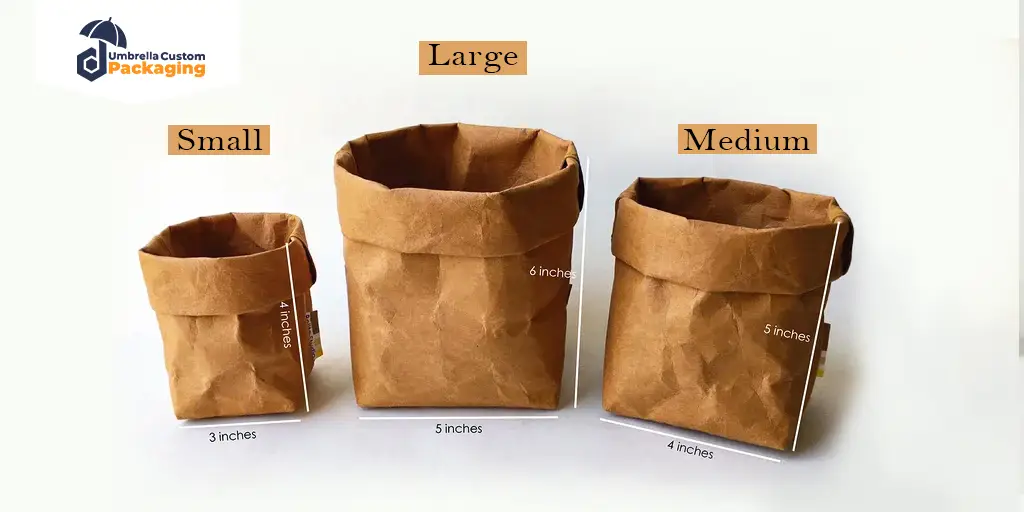
However, you can think of takeout bags in three main sizes that are as following.
|
Bag Size |
Typical Dimensions (Inches) |
Typical Dimensions (Centimeters) |
Best For |
|
Small |
4" wide x 7" tall |
10 cm wide x 18 cm tall |
A drink cup, a single sandwich, or a pastry |
|
Medium (Standard) |
7" wide x 5" deep x 12" tall |
18 cm wide x 13 cm deep x 30 cm tall |
A combo meal with a burger, fries, a drink, and condiments. |
|
Large |
8" wide x 6" deep x 14" tall |
20 cm wide x 15 cm deep x 35 cm tall |
Family-sized meals, multiple containers, and several drinks. |
Here are the key factors to consider about takeout paper bag size in simple bullet points.
First, small bags for a few items; large bags for big meals or multiple drinks.
Next, tall bags for drink cups; wide, flat bags for pizza boxes.
Furthermore, heavy items like bottles need strong, thick paper to avoid tearing.
In addition, a snug fit keeps containers upright and prevents spills.
Ease of Carrying:
Moreover, large or heavy orders are easier to carry with sturdy handles.
Finally, using the right size avoids wasting material and saves money.
First, the right bag size keeps your food safe. Imagine a tiny bag for a big meal – the food would be crushed and make a mess! However, a bag that fits just right holds your containers tightly. This means your drink will not tip over and your fries will not spill everywhere on your way home.
In addition, the perfect bag size helps everyone. For you, it is easy to carry without any trouble. For the restaurant, it saves money and paper instead of wasting it. In addition, when your food arrives perfectly in a nice-looking bag, it makes the restaurant look smart and makes you happy!
First, you have flat bags. These bags are simple and have no bottom, just like a big folder. People use them mostly for flat things, like pizza boxes or a stack of folded food boxes. They are great for carrying wide, flat items.
Next, the most common type is the square-bottom bag. This bag has clever folds at the bottom that let it stand up straight all by itself. This is super helpful because it keeps your drink cups and food containers from falling over and spilling. That is why you see this style everywhere in fast-food restaurants.
Finally, some bags have special handles. These can be flat-bottom or square-bottom bags, but they add strong paper handles or ropes to make carrying easier. Moreover, people often use these for heavier orders or for nicer restaurants because they are more comfortable to hold and look fancier.
At Umbrella Custom Packaging, we are true experts in creating every type of takeout paper bag you could possibly need. Whether you serve pizza, coffee, gourmet meals, or fast food, we have the perfect bag for your menu. Furthermore, we understand that every restaurant has unique needs, so we offer an incredibly wide range of styles and sizes.
Our team skillfully makes bags for all kinds of purposes. For instance, we create small, sturdy bags for your pastries and cupcakes. Next, we also produce the classic medium-sized bags that perfectly hold a combo meal with a drink. Moreover, for larger family orders, we create strong, large bags with secure bottoms and comfortable handles to make carrying easy for your customers.
Ultimately, our goal is to solve your specific packaging challenges. We use high-quality, durable materials so your food arrives safely and looks great. Therefore, when you collaborate with us, you can stop worrying about packaging, and instead focus on serving your amazing food.
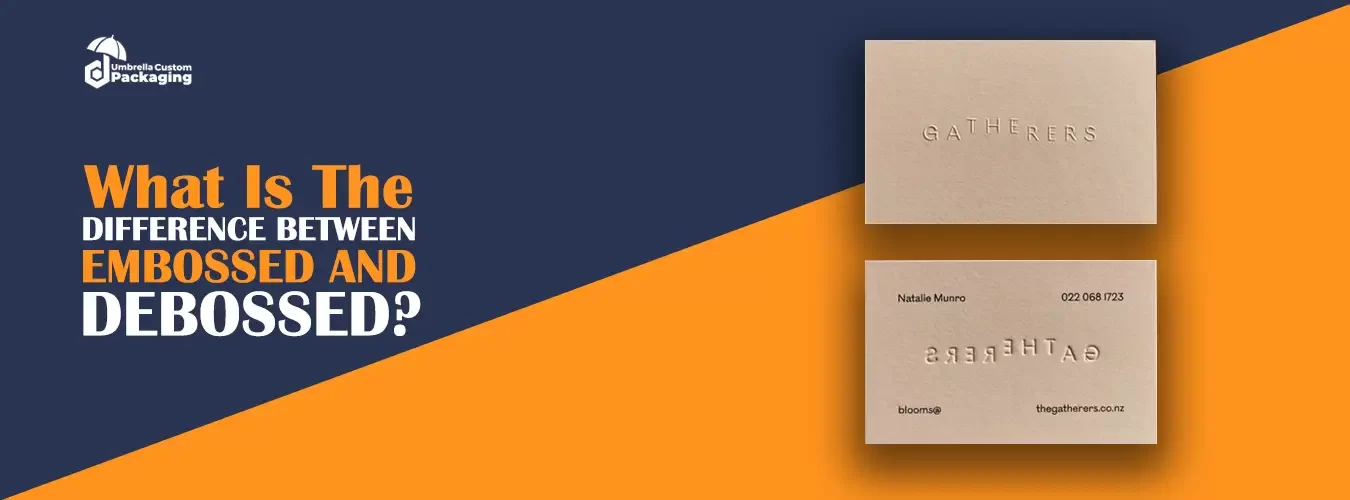
Manufacturers use Embossed and debossed techniques to create a raised or recessed design on a surface, like paper, leather, or metal.
Embossing is a technique that creates a raised (or lifted) design on a material, such as paper, leather, or metal. When you run your fingers over an embossed area, you will feel that it is higher than the surrounding surface. However, expertise uses this for logos or decorative elements that stand out.
Debossing is the opposite of embossing. It creates a sunken or recessed design, where the design or text is pressed into the material instead of being raised above it. Moreover, this technique often creates an ultrafine look, ideal for items like leather patches.
This process involves creating a raised design on materials such as paper, leather, or metal. Moreover, here is a systematic look at how it works:
| 1 | Creating Dies |
Create 2 dies of the design or text. |
| 2 | Inserting Dies |
Place the dies in a heated press. |
| 3 | Pressing |
Additionally, place the material between the dies, and then press them together. |
| 4 | Finishing the design |
Consequently, remove the material from the press with the raised design complete. |
This process creates a recessed or imprinted effect on materials like paper, leather, or metal. Here is a systematic look at how it works:
| 1 | Design moulding |
The design molds onto a metal plate or die. |
| 2 | Plate insertion |
Place the plate into a heated press. |
| 3 | Pressing |
Next, place the paper, card stock, or other material in the press. |
| 4 | Finishing the design |
At the end, apply the pressure and remove the material from the press complete with the imprinted design. |
Embossed and debossed boxes from Umbrella Custom Packaging serve a variety of industries, adding a tactile, high-end touch to products. Here is an overview of their applications across different industries:
Luxury items like perfumes, cosmetics, and watches often use this packaging to elevate the brand’s logo and create a memorable unboxing experience.
Additionally, we commonly use this technique for gift boxes and limited-edition products, such as holiday packagingor premium chocolates, adding a touch of elegance and specialty.
Meanwhile, retailers use this type of packaging for high-value items like electronics,apparel, and accessories to make their brand name or logo prominent, enhancing shelf appeal and brand recognition.
Consequently, premium foodandbeverage brands, such as custom made chocolates and wines, use embossed boxes to highlight their logos or key brand elements, enhancing a sense of quality.
Moreover, beauty brands, especially those focused on premium skincare, perfumes, and makeup, use embossed packaging to enhance the luxury experience, making products feel more exclusive.
For a refined, minimalist effect, luxury brands may choose this technique.
Special edition items like custom wine boxes, fine jewelry, or collectible items benefit from debossing designs, giving a sophisticated and classic appeal.
However, debossed boxes are great for e-commerce brands looking for delicate, elegant branding on outer or inner packaging, adding a luxurious feel to online purchases.
In addition, some specialty food items, such as olive oils or luxury snacks, may use this technique for a more refined look, often combined with matte finishes for an upscale appearance.
Subsequently, for natural or minimalist health products, this type of packaging aligns with a clean, sophisticated aesthetic, appealing to customers looking for high-quality, eco-friendly products.
Furthermore, both are effective ways to enhance the appeal of your printed materials, adding a distinctive touch that encourages interaction. Such as Here are some factors to help you decide which method to use:
Significantly, use embossing or debossing to highlight specific parts of your design, making important information stand out and grab attention.
Indeed, both techniques work well to make your logo stand out on stationery, letterheads, and envelopes, giving your brand a polished, professional appearance.
Moreover, both techniques bring a tactile dimension to your printed pieces, making them more engaging and pleasing to the touch.
In fact, embossing can add a sense of luxury and sophistication, conveying that your brand values quality and attention to detail.
As a result, consider these factors to choose the technique that best enhances your print project.
Significantly, Umbrella Custom Packaging is the perfect choice for high-quality embossed and debossed boxes. We offer custom packaging with special designs that help your products stand out. Whether you want a raised effect with embossing or a smooth, recessed look with debossing, we create boxes that look great and feel amazing to touch. Moreover, our expertise pays close attention to detail to give your brand a polished and professional appearance. Overall, with many options for customization, including foiling and finishes, we are ideal for luxury items, retail products, and special editions.
In the end, embossing is perfect for creating a bold, raised design that grabs attention, while debossing provides a simpler, elegant look with its recessed design. Ultimately, both techniques significantly enhance the visual appeal and tactile experience of materials, making them ideal for high-end products, branding, and custom designs.
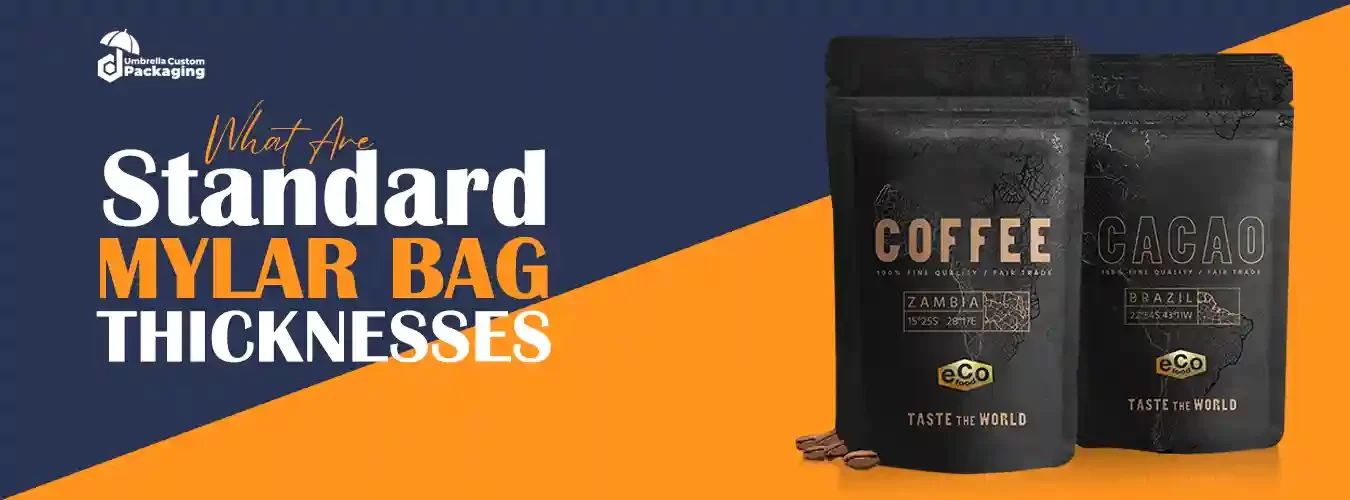
Mylar bags are available in various thicknesses, measured in "mils," to suit different storage needs. Standard options include 2-3 mil bags, which are lightweight and suitable for short-term storage like snacks; 4-5 mil bags that offer moderate durability for items like coffee and herbs; and 7-10 mil bags designed for long-term storage, providing excellent protection against light, moisture, and air. Generally, thicker bags offer greater protection and durability, though they may be less flexible and cost a bit more.
Mylar bags are flexible, durable storage bags made from a type of polyester film known as BoPET (biaxial oriented polyethylene terephthalate). This material was originally developed by DuPont and is commonly used for its high tensile strength, chemical resistance, and exceptional barrier properties.
Moreover, these bags are often silver or metallic in color and can be either transparent or opaque. Overall, Mylar bags are a reliable choice for keeping products safe and lasting longer, especially for things that can be damaged by light, air, or moisture.
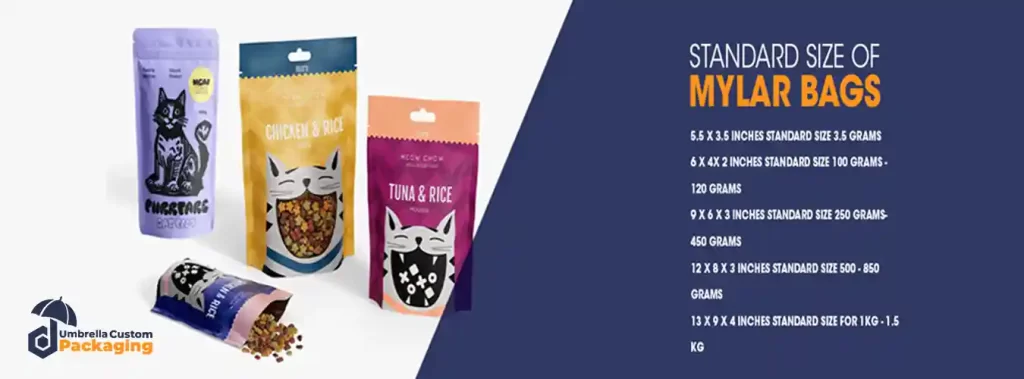
Measuring the size of Mylar bags accurately is essential for ensuring that the bags fit your products well and meet your storage needs. Here is a systematic guide on how to measure:
1. Determine the Type of Measurement Needed
2. Measure the Width
3. Determine the Height
4. Measure the Gusset
5. Calculate Volume
6. Confirm Product Fit
However, by following these steps, you can select or verify the right Mylar bag size to securely store and protect your products.
Mylar bags come in a range of sizes to accommodate different storage needs, from small, single-use items to bulk storage. Here is an overview of common types of these bags based on size:
| Types |
Sizes |
Applications |
| Small |
3” x 4”, 4” x 6”, or 5” x 7” |
Items like spices, herbs, vitamins, or single servings of food. |
| Medium |
6” x 9”, 7” x 10”, or 8” x 10” |
Coffee beans, nuts, dried fruits, or powdered supplements. |
| Large |
8” x 12”, 10” x 14”, or 10” x 16” |
Like rice, pasta, flour, and other pantry staples. |
| Extra-Large |
12” x 18”, 14” x 20”, or 15” x 20” |
Grains, legumes, pet food, and other bulk dry goods. |
| Jumbo |
18” x 28”, 20” x 30”, or larger |
Survival food storage, commercial kitchens, or large bulk storage setups. |
At Umbrella Custom Packaging, we offer a wide range of Mylar bags to meet diverse storage and packaging needs. However, here is a look at the options available:
Significantly, Mylar bag packaging is a versatile and durable solution used across multiple industries to protect products from light, moisture, oxygen, and contaminants.
Food Industry: For example, used for storing snacks, freeze-dried foods, and other items that need to stay fresh for a long time.
Pharmaceutical & Medical: In addition, it protects medicines, supplements, and medical tools.
Cannabis & CBD: Similarly, it keeps edibles, flowers, and concentrates fresh and potent.
Agriculture & Seed Storage: Moreover, it helps keep seeds alive and protects fertilizers.
Chemical & Industrial Products: In particular, pack moisture-sensitive chemicals and powders.
Cosmetics & Skincare: Also, the kit keeps ingredients safe and protects small product samples.
Electronics: Additionally, it provides static-proof protection for small parts like circuit boards.
Pet Food & Treats: Finally, it keeps pet food and treats fresh and free from germs.
Overall, each of these industries utilizes Mylar bags to ensure their products remain protected and maintain quality over time.
Mylar bags have many great benefits, which is why they’re often used for storage and packaging. Firstly, they can keep out moisture, light, and air, which helps protect items from spoiling, being ruined, or being contaminated. Additionally, when used with oxygen absorbers, they can keep food and other things fresh for months or even years.
Made from a strong and flexible material, these bags do not tear or get holes easily, offering great protection in different storage conditions. Moreover, they are easy to store because they take up less space than hard containers. Finally, these bags can be used for everything from small samples to large items like food, medicine, electronics, and more.
Importantly, these bags are a cost-effective choice for long-term storage, especially when storing large amounts of products. Moreover, these benefits make Mylar bags a popular option for preserving quality and extending the shelf life of many different items.
At Umbrella Custom Packaging, we help you pick the perfect Mylar bags for your needs. We also offer many ways to customize the bags so they look great on the shelf. Ultimately, you can choose from bags with windows, side views, and different shapes. Mylar bags are great because they protect and keep products fresh, which is why they are used in many industries and for everyday items.
In conclusion, to measure the thickness of Mylar bags, you use a tool like a caliper to check how thick the bag is in mils. By measuring in a few places and averaging the results, you can make sure you pick the right thickness for your needs, whether you need it for short-term or long-term storage. Additionally, this also helps you choose the best bag to protect your product.
We offer Packaging Boxes delivered to your door. Secure, professional, and affordable, our custom made packaging boxes are guaranteed to protect and transport your valuable items. Our devoted team is always there to serve you.














Our Secure Payment Modes
© 2026 Umbrella Packaging All rights reserved.