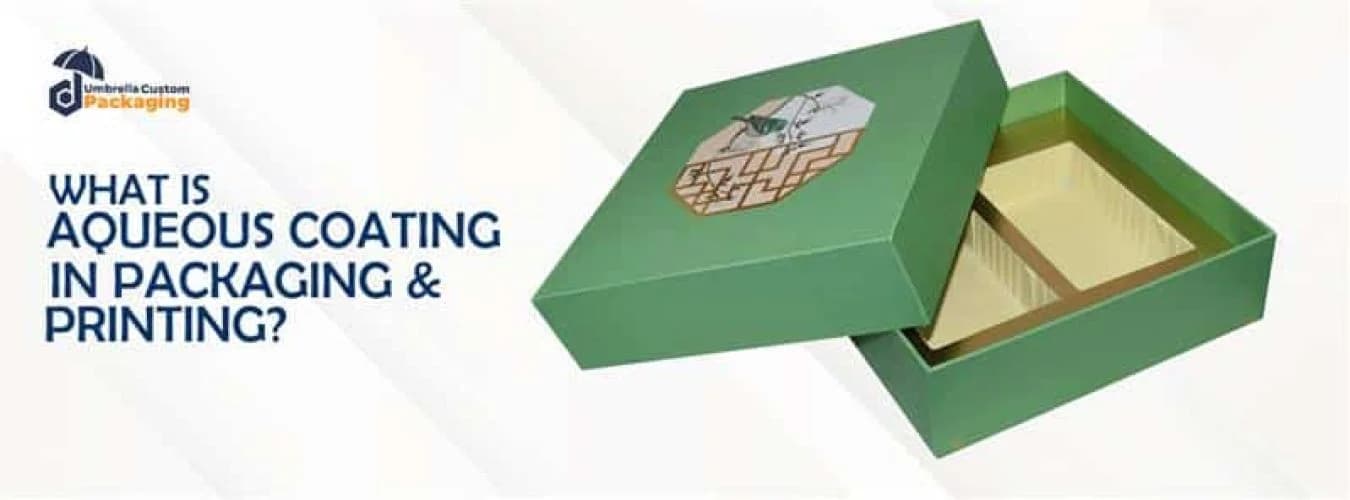
Aqueous coating is a special water-based liquid that people use to protect and shine paper products like brochures, business cards, and book covers. First, workers print the design on the paper, and then they apply the coating to make it look glossy or matte.
Because it is water-based, it dries quickly and doesn’t smell bad like some other coatings. Moreover, it’s eco-friendly, which means it’s safer for the environment. Another great thing about aqueous coating is that it makes paper stronger and more resistant to scratches, dirt, and fingerprints. For example, if you spill a little water on a coated business card, the ink won’t smudge as easily.
Many companies use this coating because it’s affordable, dries fast, and keeps printed materials looking fresh for a long time. So next time you see a shiny flyer or a smooth magazine cover, it probably has aqueous coating on it!
Aqueous coating is a thin, water-based layer that companies add to packaging to make it look better and last longer. First, they print the design on the box or wrapper, and then they spray or roll on the coating to give it a shiny or smooth finish. Since it’s made with water, it dries fast and doesn’t harm the environment like some chemical coatings.
Moreover, it helps protect the packaging from scratches, moisture, and fingerprints, keeping it fresh and clean. Many food and product brands use aqueous coating because it’s safe, affordable, and makes their packaging stand out.
For example, a cereal box with this coating will stay bright and colorful even if it gets bumped on store shelves. It also makes labels and logos look more professional. So next time you see a shiny snack bag or a smooth medicine box, it probably has an aqueous coating to keep it looking great!
It works like magic in 4 ways:
1) It keeps fingerprints and little scratches away
2) It makes colors look brighter (or softer if you want)
3) It dries in just minutes, so we can make things faster
4) It's made mostly from water, so it's safer for our planet
Surface Preparation: First, cleaning and prepping the printed material for coating
Coating Application: Next, roll or spray on the water-based coating
Drying Process: Then, warm air dries it in minutes
Quality Inspection: After that, check the uniform coating and make sure of a smooth finish
Final Processing: Finally, cut, fold, and package the product
This streamlined process ensures a protective, high-quality, and eco-friendly finish for printed surfaces.

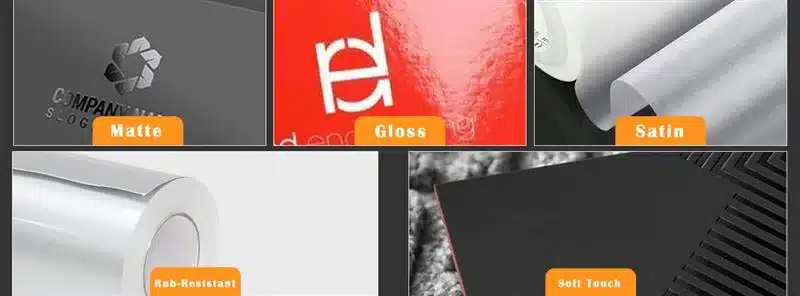
Aqueous coatings come in different finishes, each with its special look and purpose.
This type makes packaging shiny and bright, helping colors pop. It also adds a smooth, slippery feel. Many candy wrappers and shiny product boxes use gloss coating.
Unlike gloss, matte gives a dull, non-reflective finish that looks elegant and professional. Books, luxury product packaging, and business cards often use matte coating.
This is a mix between gloss and matt, it has a slight shine but isn’t too flashy. It’s great for brochures and product labels that need a balanced look.
This special coating feels velvety and smooth, almost like suede. High-end cosmetics and tech packaging often use it to make products feel more luxurious.
It protects prints from scratches & smudges. Keeps packaging looking fresh through handling and shipping.
Each type protects the print while giving a unique look and feel, so companies choose based on their packaging needs!
Here are the key benefits of aqueous coating in packaging:
Durability: protects packaging from smudging, scratches, and moisture damage, keeping it in excellent condition.
Quick Drying: Speeds up production time, making the printing process more efficient.
Enhanced Appearance: Available in various finishes like glossy, matte, satin, and soft-touch, helping brands achieve their desired look.
Eco-Friendly: Water-based and contains fewer harmful chemicals, making it a sustainable choice for businesses.
Improved Color & Readability: Glossy coatings make colors vibrant, while matte coatings reduce glare for easier reading.
Premium Feel: adds a smooth or textured surface, making packaging feel high-end and professional.
When selecting a protective finish for your printed materials, aqueous coating and spot UV serve different purposes. Here's a comparison to help you choose:
Consider aqueous coating when you need:
Opt for spot UV when you want:
For maximum visual impact, some projects combine both techniques using aqueous coating for overall protection while adding spot UV highlights to key design features. Your choice ultimately depends on your project's requirements, desired aesthetic, and budget.
Aqueous coating is like an invisible shield that makes printed things look better and last longer. Here’s how different jobs and businesses use it:
Keeps cereal boxes, snack bags, and frozen food boxes shiny and colorful
Protects from fingerprints and small spills so the pictures stay bright
Makes medicine bottles and vitamin labels smudge-proof
Helps important instructions stay clear and easy to read
Gives book covers a smooth feel (soft touch) or pretty shine (gloss)
Stops magazines from getting dirty when people flip through them
Makes shoe boxes, toy packages, and makeup boxes look fancy
Prevents scratches when products sit on store shelves
Helps business cards feel extra nice (matte or silky)
Keeps flyers and brochures from fading in sunlight
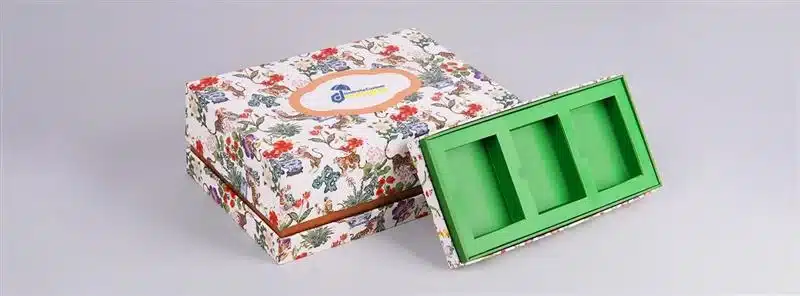
Aqueous coating is a fantastic way to make your printed materials look amazing and last longer. Whether you want shiny posters, classy business cards, or creative packaging, it can do it all. It is like adding a touch of magic to your designs.
If you have any questions about this printing or other printing methods, we are here to help at Umbrella Custom Packaging. Printing can sometimes feel overwhelming because there are so many options, like UV coating, aqueous coating, embossing, and foil stamping. Fortunately, our team is always ready to explain these techniques in simple terms so you can choose the perfect option for your project.
At Umbrella Custom Packaging, we believe that every detail matters. Whether you need shiny finishes for packaging, creative textures for business cards, or durable prints for promotional items, we can guide you through the process. Moreover, with our experience, we can recommend the best printing solutions that fit your needs, budget, and design goals.
Therefore, do not hesitate to contact us! We are happy to answer your questions, discuss your ideas, and help bring your vision to life. However, from the first step to the finished product, we will make sure you are thrilled with the results. Let us help make your packaging and printing stand out!
Card games remain a global phenomenon, bridging generations from family game nights to professional poker tournaments. As playing cards have evolved from simple paper slips into elegant, collectible items, brands are seeking innovative ways to elevate their presentation. One of the most effective methods? Custom packaging.
Knowing the exact dimensions of the playing cards is critical to ordering the right-sized box. A precise fit prevents cards from shifting, folding, or creasing during shipping and storage. However, to maximize protection, many brands now use durable shipping boxes alongside protective inner solutions, such as Mylar bags, to keep card decks moisture-free, dust-proof, and perfectly preserved before they even reach the box.
Historical Background: Playing cards trace back to 9th century China. Over centuries, their popularity exploded, leading to thousands of distinct games worldwide; estimates range from 1,000 to over 10,000 unique card games. Today, families cherish traditions of gifting card decks during Christmas, while collectors seek limited-edition sets.
First, a standard deck of playing cards has 52 cards, which are divided into four suits: hearts, diamonds, clubs, and spades. However, not all decks are the same; for instance, a kids' game like Old Maid might have 51 or 49 cards after removing one Queen, while Uno uses 108 cards. Similarly, travel decks sometimes include only 36 cards to save space.
Finally, decks for games like Crazy 8s or Slap Jack typically use the full 52 cards, but often include two jokers, resulting in 54 cards. Therefore, the number changes depending on the game and the age of the players.
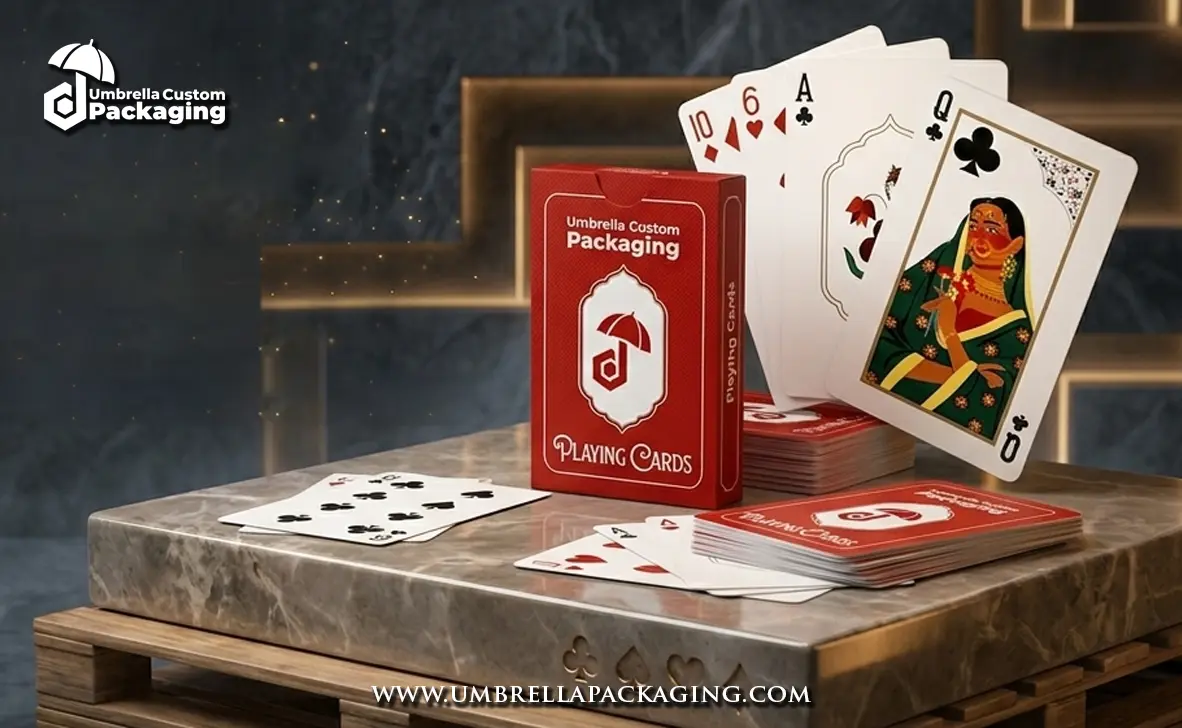
What is the Standard Thickness of Cards & Boxes?
Individual Card Thickness: ~0.0078 inches / 0.22 mm / 0.022 cm
Full Deck Box Thickness: ~0.75 inches / 19.05 mm / 1.9 cm (for 52 cards)
Choosing a thicker card stock means you’ll need a sturdier, slightly larger box. Always account for material density when ordering custom packaging.
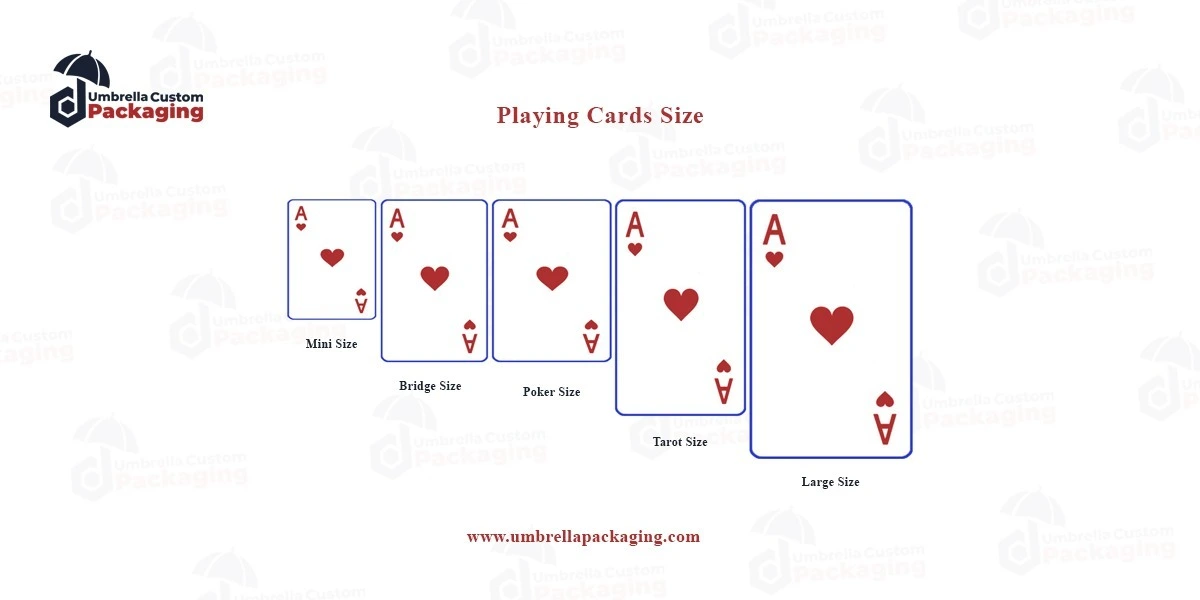
First, playing card size matters because different games require different handling. For example, small children have tiny hands, so they need shorter and wider cards for a comfortable grip. Similarly, travelers prefer mini cards because they fit easily into pockets or bags. Second, size affects how well you can hide or fan your cards.
For instance, large cards like Slap Jack at 4 inches tall make pictures very visible, but you cannot hide them easily. On the other hand, standard poker-sized cards at 2.5 x 3.5 inches allow smooth shuffling and dealing. Third, size matters for durability. Thicker cards withstand bending from rough handling by kids.
Finally, manufacturers consider the box size too. A larger card needs a bigger box, which takes up more storage space on your shelf.
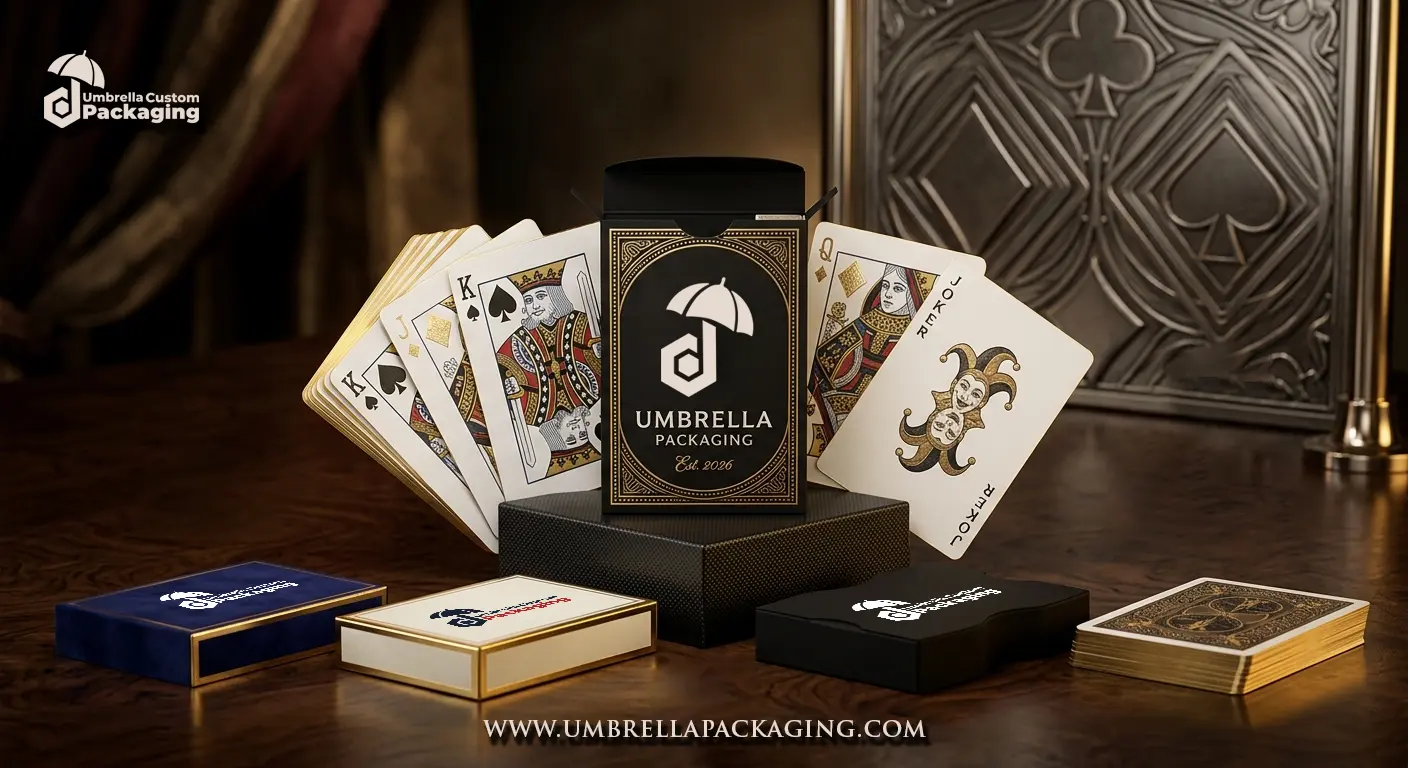
Every card game has unique sizing. Knowing these playing card dimensions helps you order custom boxes that prevent damage during transit.
1-Poker Cards
Poker remains one of the most famous card games worldwide. While sellers offer vintage and novelty variations, the standard poker card size is:
Card Dimensions: 2.5 x 3.5 inches / 63.5 x 88.9 mm / 6.35 x 8.89 cm
Box Dimensions: 7 x 6 x 2 inches / 177.8 x 152.4 x 50.8 mm / 17.78 x 15.24 x 5.08 cm
Tarot card dimensions vary by seller, but the industry average is:
Card Dimensions: 2.75 x 4.75 inches / 69.85 x 120 mm / 6.98 x 12 cm
Box Dimensions: 3.5 x 5.5 x 1.5 inches / 88.9 x 139.7 x 38.1 mm / 8.89 x 13.97 x 3.81 cm
Bridge cards are slightly narrower than poker cards, making them easier to hold in large hands:
Card Dimensions: 3.49 x 2.24 inches / 88.8 x 57 mm / 8.88 x 5.7 cm
Box Dimensions: 5.2 x 3.3 x 1.2 inches / 132.08 x 83.82 x 30.48 mm / 13.2 x 8.38 x 3.05 cm
Less common but distinctive, European-style cards measure:
Card Dimensions: 2.4 x 3.8 inches / 61 x 97 mm / 6.1 x 9.7 cm
Magic cards have become a cultural staple, often personalized for events like weddings. Their dimensions match standard poker sizing:
Card Dimensions: 2.5 x 3.5 inches / 63.5 x 88.9 mm / 6.35 x 8.89 cm
Oracle cards come in multiple styles. Here are the most popular card deck dimensions for each:
|
Type |
Card Dimensions |
Box Dimensions |
|
Traditional |
2.7 x 4.7 in |
4.72 x 2.74 x 0.75 in |
|
Tall |
3.5 x 5.7 in |
4.95 x 6.5 x 2.25 in |
|
Wide |
3.2 x 4.7 in |
4.25 x 5.5 x 0.75 in |
|
Large |
3.5 x 5.0 in |
4.5 x 5.75 x 1.7 in |
For pocket-friendly portability, many brands offer mini decks:
Card Dimensions: 2.63 x 1.85 inches / 67 x 47 mm / 6.7 x 4.7 cm
Box Dimensions: 2.82 x 1.87 x 0.69 inches / 71.7 x 47.7 x 16 mm / 7.17 x 4.77 x 1.6 cm
8-Kid’s Playing Card Dimensions
|
Game |
Description |
Card Size (in) |
Box Size (in) |
|
Traitors Abroad |
Cooperative mystery game; slim poker-sized cards easy to hide. |
2.26 x 3.5 |
3.15 x 1.97 x 1.18 |
|
Slap Jack |
Fast slapping game; extra-large cards for visible Jacks. |
4.0 x 2.75 |
9.25 x 8.1 x 0.6 |
|
Old Maid |
Classic matching game; short, wide cards for small hands. |
3.4 x 2.4 |
3.9 x 3.0 x 0.3 |
Why choose us for Your Playing Cards?
You now have the measurements of a deck of cards for dozens of popular games. Whether you need standard dimensions or fully custom sizes, Umbrella Custom Packaging is here to support you every step of the way.
We specialize in:
· Custom rigid boxes and card sleeves
· Eco-friendly and durable materials
· Protective inserts and Mylar bag integration
· Short-run and bulk orders
Do not let loose-fitting boxes ruin your product’s first impression. Contact Umbrella Custom Packaging today for a free personalized quote and let us make the perfect packaging solution for your brand.
In short, playing card dimensions matter because different games need different sizes for comfort, visibility, and durability. As we have seen, standard decks have 52 cards, but kids' games, travel decks, and games like Uno use varying numbers. Similarly, the thickness of cards and boxes affects protection and storage. Therefore, knowing exact measurements helps you choose the right deck or custom packaging. Finally, a perfect fit prevents damage and leaves a good impression, whether you play poker, tarot, or a simple kids' game.
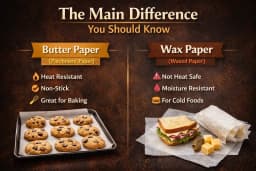
People often mix up cooking papers like wax paper, butter paper, and parchment paper. One big confusion is thinking wax paper and butter paper are the same, but that is not true. They look and feel similar, but they are different. Read this blog to learn the key differences and pick the right one.
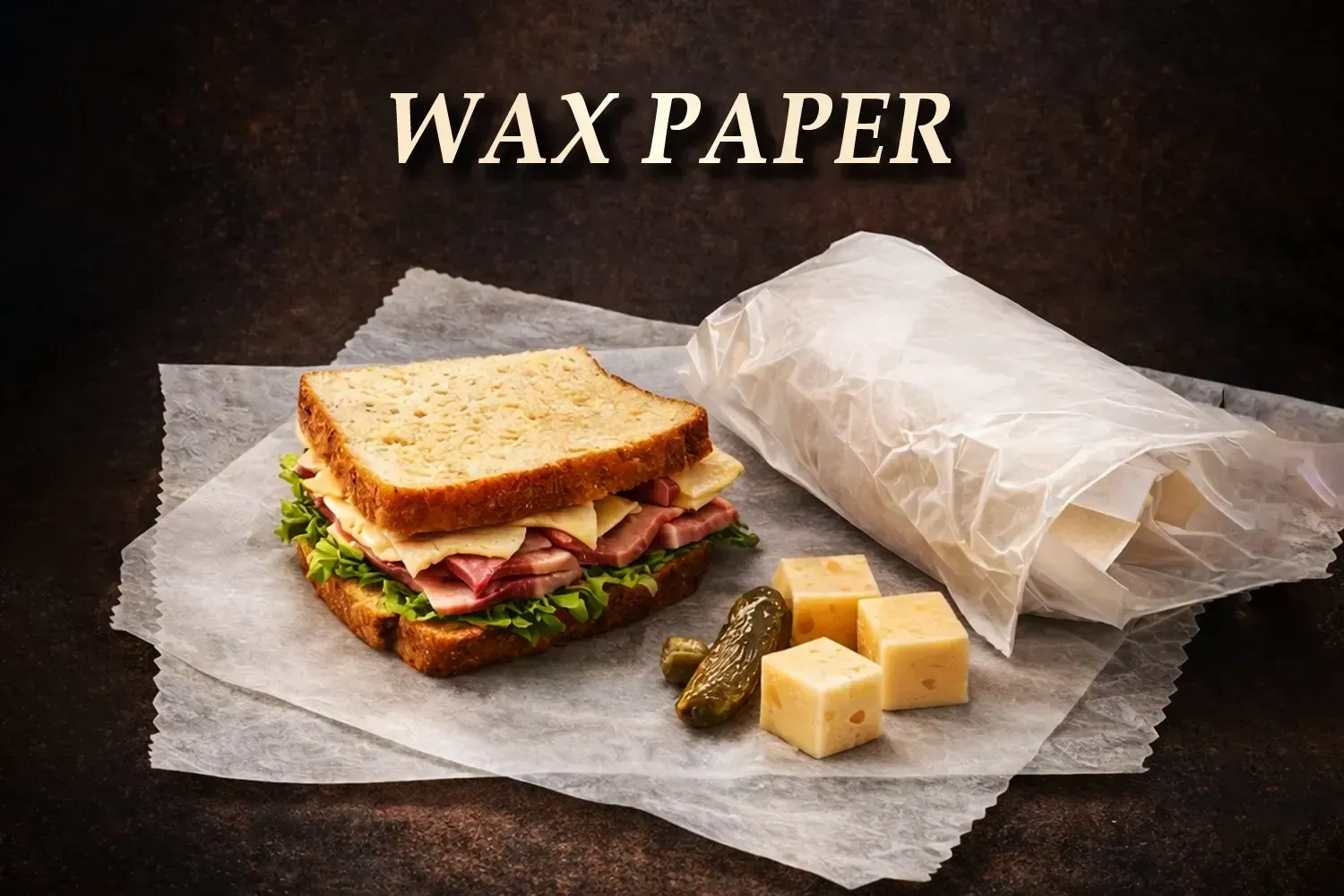
Wax paper is a thin paper coated with a thin layer of wax, which makes it waterproof and non-stick. Because of this coating, it is great for wrapping cold foods like sandwiches, cheese, or butter without anything sticking to it. It can also help keep food moist for a short time.
On the other hand, wax paper is not heat-resistant. This means you should never put it in the oven, since the wax will melt and could even cause a fire. Instead, we use it for kitchen tasks at room temperature, like lining countertops or separating layers of cookies.
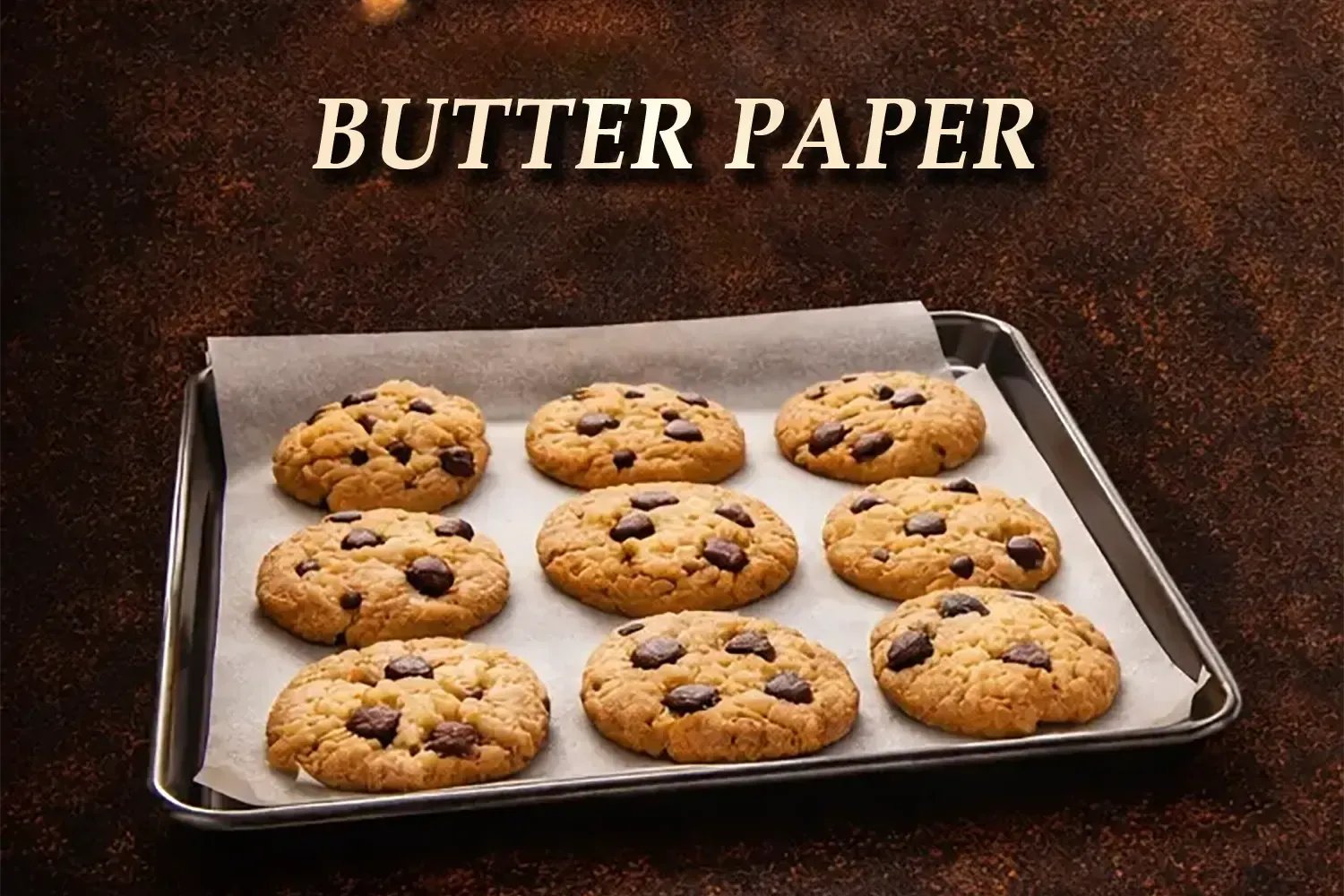
Butter paper is a thin, smooth paper that has been treated to be non-stick and grease-resistant. In most countries, it is exactly the same thing as wax paper; our manufacturers make it by coating the paper with a thin layer of wax. This is why it is often used to wrap butter, hence the name, as it prevents the butter from melting onto your hands or sticking to its wrapper.
However, it is very important to know that in some specific baking contexts, people might use the name "butter paper" to mean parchment paper. However, this is less common. Just like wax paper, the most common type of butter paper cannot go in the oven because the wax will melt. It is best for wrapping cold or room temperature foods and lining baking trays that will not be heated.
It depends on what you are doing. There is no single "best" because each one shines in different situations.
· Butter paper is the best option when you use heat. For example, if you bake cookies, cakes, bread, or roast vegetables in the oven, choose butter paper. It handles high temperatures without melting or burning.
· Wax paper is the best option when you work with cold food. For example, if you wrap a sandwich, separate cheese slices, or line a plate for messy snacks, choose wax paper. It costs less and works great for cold jobs.
Therefore, the best option depends on your job:
Hot job →Butter paper is best.
Cold job → Wax paper is best.
· Wrap cold sandwiches
· Separate cheese or meat slices
· Line plates for messy snacks like barbecue chicken
· Freeze burger patties or chicken breasts
· Cover a bowl of dough while it rises
· Roll out pie crust or cookie dough
· Bake cookies, cakes, and brownies
· Line cake pans or baking trays
· Roast vegetables or potatoes
· Steam fish or chicken in a paper packet
· Cover a casserole in the oven
· Roll out sticky dough
Use butter paper for baking. Butter paper handles heat well. Wax paper cannot handle heat. Wax paper melts in the oven. It smokes and ruins your food. So never, put wax paper in a hot oven.
Butter paper has a silicone coating. This coating loves heat. However, you can line your baking tray with butter paper. Bake cookies or cake on it. After baking, the food slides right off. No sticking and no mess.
You can use wax paper for preparing baking items. Roll out cookie dough on wax paper. Cut shapes on it. Then move the dough to a butter paper tray. You can also cover rising dough with wax paper. However, do not put wax paper in the oven.
In short, butter paper goes inside the oven. Wax paper stays outside. Pick the right paper for happy baking.
Wax paper is great for wrapping cold foods like sandwiches, cheese, and butter because its waxy coating keeps food from sticking and locks in moisture. Butter paper, which is often the same as wax paper, works well for storing oily or greasy foods, such as burgers or pastries, since it resists grease.
However, remember that neither should be used for hot foods or put in the freezer for very long, because the wax can crack or melt. For short-term, cold storage, both are perfect choices.
Wax paper and butter paper look alike but they are not the same. Use wax paper for cold or room-temperature tasks, such as wrapping food or separating sticky items. Do not put wax paper in the oven or microwave. Use butter paper (parchment paper) for baking, roasting, and any hot oven cooking. Moreover, for cookies, cakes, and all baking, always choose butter paper. For a simple sandwich wrap, choose wax paper.
No, it is still not safe. Even at low temperatures, the wax coating can melt onto your food or the oven rack. Stick to parchment paper for any type of heating.
Yes, parchment paper and baking paper are two names for the same thing. Both can go in the oven because they have a special coating that handles heat. Butter paper is not the same it has no heat-resistant coating, so it cannot be used for baking.
Not necessarily. Many wax paper bags and sheets are made from natural wax and can be recycled or composted, making them a better choice than plastic for short-term food storage.
This guide covers everything you need to know about custom packaging boxes. Picking the right custom packaging box is not just about looks, it is a smart business decision that protects your products, saves money, and keeps customers happier.
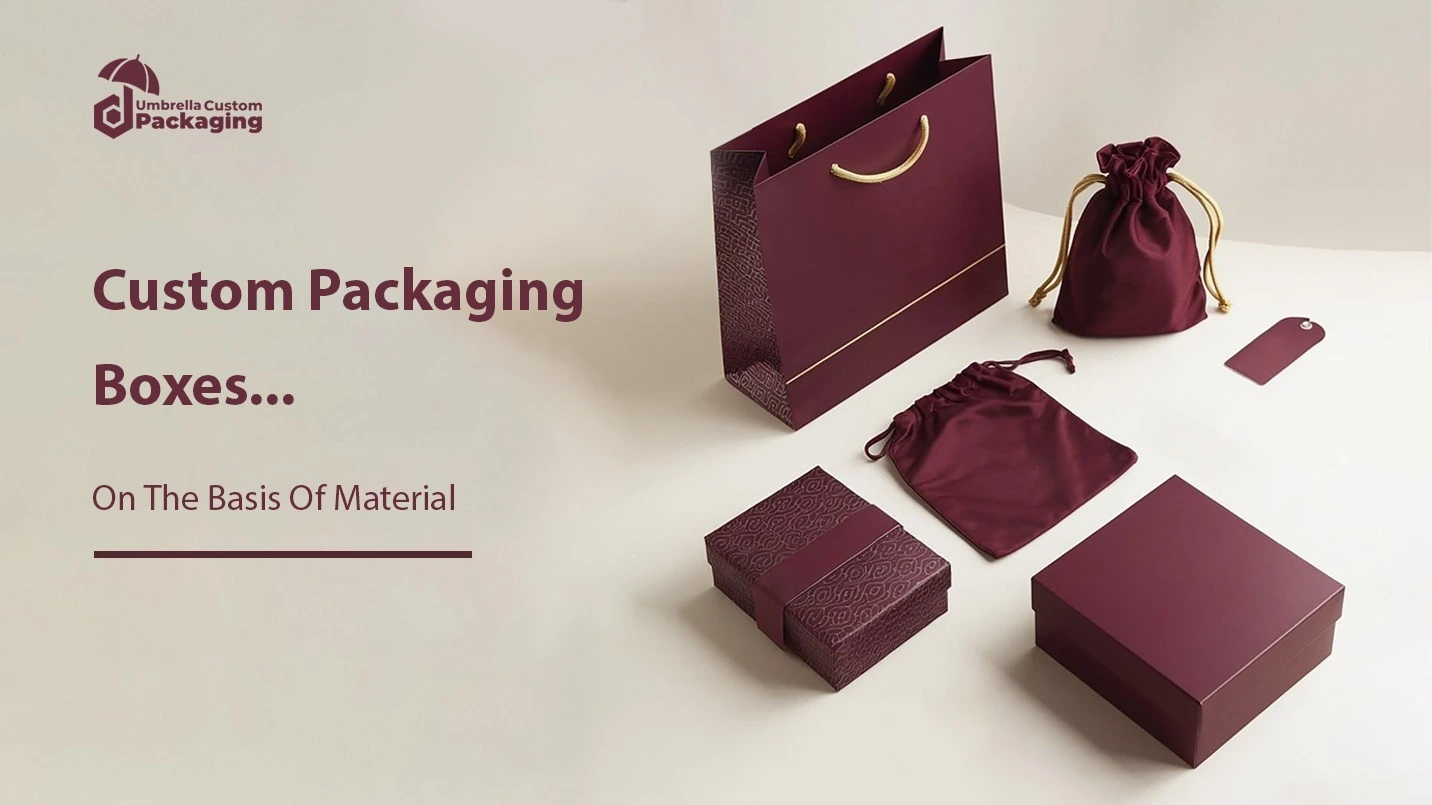
First, paperboard or cardboard is thin, stiff, and lightweight, like a cereal box. It is cheap, folds flat, and prints beautifully, but it is not very strong or waterproof.
Next, linen is a natural fabric made from flax plants, often wrapped around rigid boxes. It looks elegant and feels soft, but it can stain easily and costs more than paper.
Then, bux board is a thick, dense paperboard that is very sturdy but still foldable. It is often used for rigid box bases or luxury cartons because it holds shape well.
After that, rigid board is a very thick, non-foldable material that stays permanently shaped. It feels heavy and premium perfect for iPhone boxes or luxury gifts, but it costs more and takes up storage space.
Moving on, corrugated board has a wavy middle layer between two flat liners. It is super strong, great for shipping boxes and stacks well, though printing is not very sharp.
Finally, fabric and textile boxes are rigid boxes covered with soft materials like velvet, silk, or cotton. Moreover, they look and feel very luxurious, ideal for jewelry or weddings, but they are expensive and can get dirty easily.
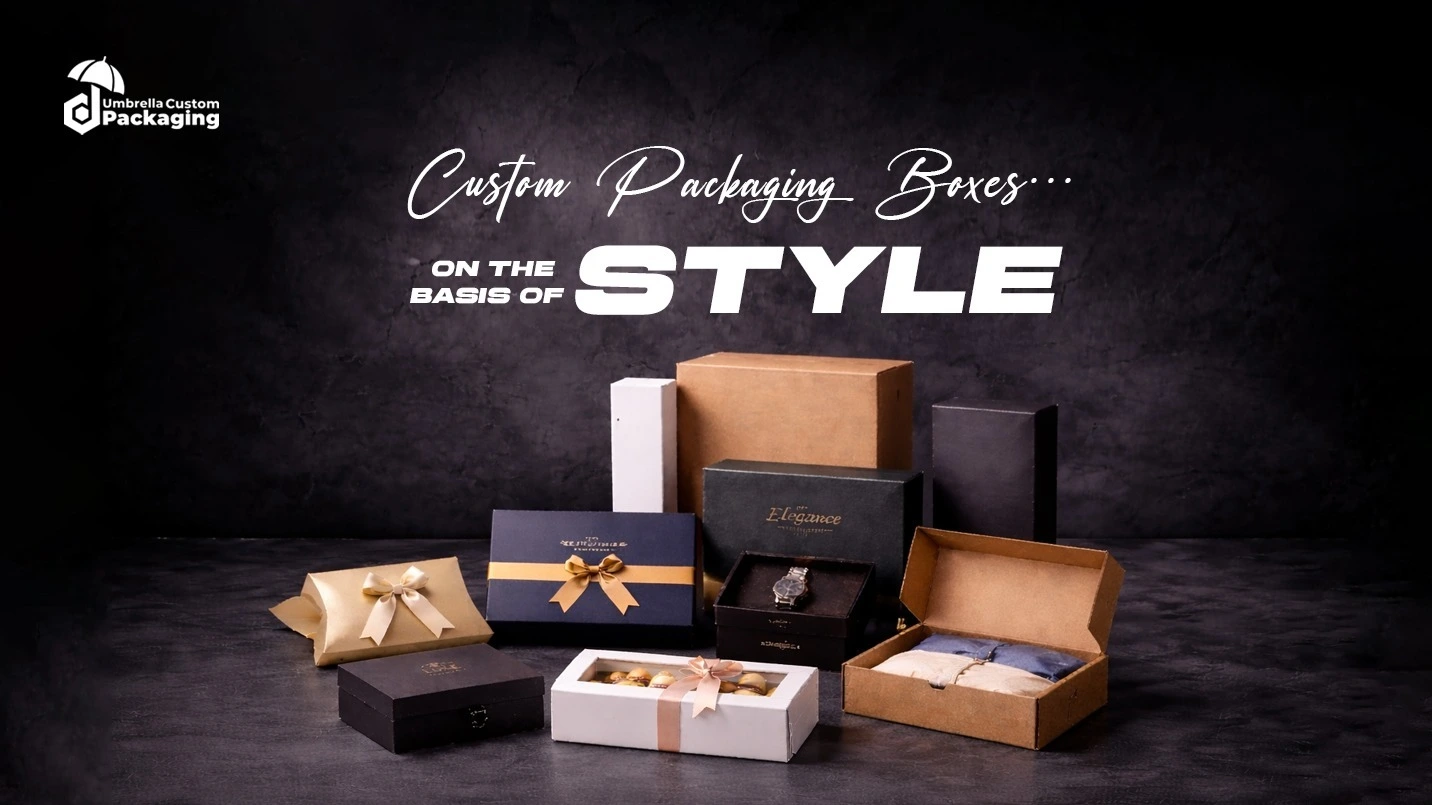
|
Style |
|
|
Key Features |
|
Pillow Box |
First, a soft, curved box that bulges in the middle and tapers at both ends, like a pillow. |
Small gifts, candies, jewelry, party favors |
Rounded shape; often held closed by ribbon or sticker |
|
Foldable Carton |
Next, a flat box made from thin paperboard that can be folded into shape when needed |
Retail products like cereal, medicine, cosmetics |
Ships and stores flat; saves space |
|
Tuck End Box |
A carton where the top and bottom flaps tuck into slots on the sides to close. |
Small electronics, soap bars, tea bags |
No glue needed; easy to open and close |
|
Shipping Box |
A strong, plain box used to pack and send products through the mail or courier. |
Online orders, moving boxes, industrial goods |
Made of thick corrugated board; very durable |
|
Regular Slotted Container (RSC) |
Moreover, a standard shipping box where the top and bottom flaps meet exactly in the middle. |
General shipping, e-commerce orders, moving |
Most common and cheapest shipping box style |
|
Drawer Box |
A box with an outer sleeve and an inner tray that slides out like a drawer. |
Premium gifts, electronics, watches, cosmetics |
Elegant unboxing; reusable for storage |
|
Mailer Box |
In addition, a sturdy box with a separate lid that fits over the base, designed specifically for shipping products. |
Subscription boxes, online clothing orders, gift shipments |
Looks professional; easy to open; strong enough for transit |
Different box types offer different levels of strength. A shipping box holds heavy items, but a pillow box crushes easily.
The way a box opens and looks affects how customers feel. A drawer box feels luxurious, while a regular slotted container feels plain.
Some styles cost more to make and store. Foldable cartons ship flat and save space, but rigid boxes cost more.
Box shapes affect how many fit in a truck. However, rectangular boxes stack neatly, but pillow boxes waste space and cost more to ship.
Moreover, the box style tells customers what kind of brand you are. A window box shows confidence, while a plain tuck end box may look cheap.
Some boxes go straight from the truck to the shelf. Display boxes open instantly, but regular slotted containers need unpacking.
However, different box types use different amounts of material. Foldable cartons are easy to recycle, but plastic window boxes are harder.
Stacking Strength
At the end, weak or oddly shaped boxes collapse when stacked. Regular slotted containers stack well, but pillow boxes cannot be stacked at all.
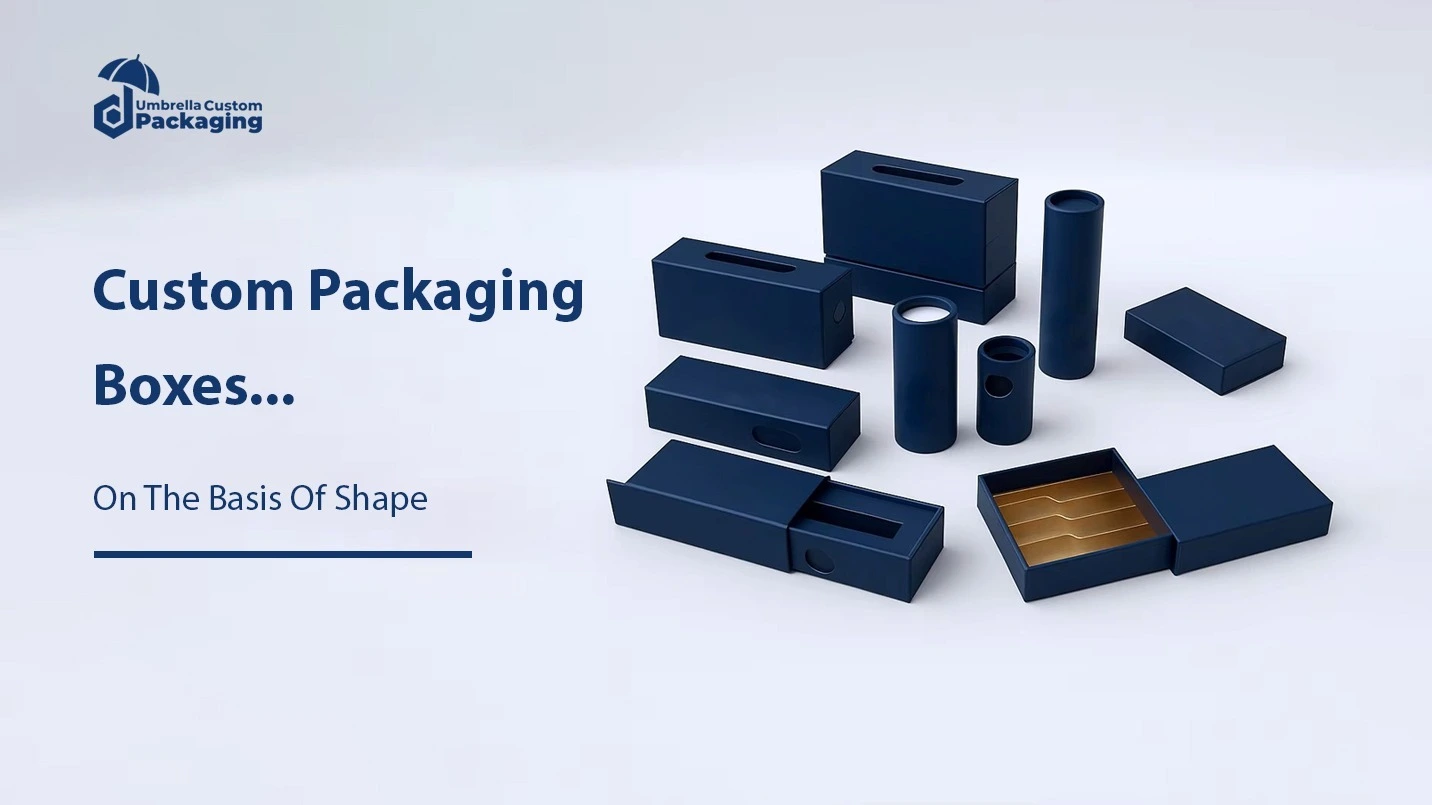
Rectangular Boxes: First, this is the most common shape. In other words, they can be long, short, or tall. As a result, they are great for stacking and shipping. Furthermore, they are cheap and easy to make. For example, a pizza box, a shoe box, and a shipping carton are all rectangular.
Square Boxes: Moving on, square boxes have equal length and width. Consequently, they look balanced and modern. Moreover, they are perfect for small luxury items like watches or jewelry. However, they are slightly less efficient for shipping compared to rectangles.
Round Cylindrical Boxes: Next, round cylindrical boxes look like a can or tube. Therefore, they are very eye-catching on shelves. In addition, they are good for candles, chips, or whiskey. Nevertheless, they are not space-efficient for shipping.
Triangular Boxes: After that, triangular boxes have three sides with a triangle base. As a result, they are unique and memorable. On the other hand, they are bad for stacking and costly to make. Thus, we only use them for special events or fancy gifts.
Hexagonal and Octagonal Boxes: Moving forward, hexagonal boxes have six sides, while octagonal boxes have eight sides. Because of this, they look elegant and strong. In addition, they offer more surface area for printing. Yet, they are less efficient to ship than rectangles, but they are very pretty.
Pyramid Boxes: Then, pyramid boxes come to a point at the top like a small Egyptian pyramid. For this reason, they look dramatic and fun. However, they cannot be stacked at all. Therefore, they are best for party favors or product launches.
Tubular Boxes: Finally, tubular boxes are long, narrow, and hollow like a mailing tube. As a result, they are perfect for posters, yoga mats, or rolled documents. Although they are not good for stacking, they are ideal for long items.
|
Add-on Type |
Description |
Visual Effect |
Best For |
|
Lamination |
A thin plastic layer applied to the box surface. |
Makes box shiny (gloss) or soft (matte); also waterproof |
Retail boxes, food packaging, cosmetics |
|
Textured Finish |
A rough or patterned surface instead of smooth paper. |
Feels like linen, leather, or silk to the touch |
Luxury gifts, wedding favors, premium brands |
|
Spot UV |
A glossy, raised coating applied only on specific areas |
Creates shiny logos or text on a matte background |
Brand names, product titles, special designs |
|
Embossing |
Raising a design upward from the paper surface. |
Gives a 3D, bumpy feel to logos or patterns |
High-end packaging, book covers, certificates | |
|
Debossing |
Pressing a design downward into the paper surface. |
Creates a dented, sunken look that feels like an imprint |
Elegant boxes, minimalist branding, wine boxes |
Where to Find the Best Custom
Packaging
At Umbrella Custom Packaging, we help you find the perfect custom packaging for your product. Whether you need primary packaging that directly touches your product, secondary packaging for retail displays, or tertiary packaging for shipping, we have it all. In addition, we offer every material, shape, and style you can imagine, from simple foldable cartons to luxurious drawer boxes and telescopic tubes.
Our team makes the whole process easy for you. Just tell us what product you want to pack, how much protection it needs, and what kind of look you want for your brand. Then, we will suggest the best box type for your budget, whether you need strong shipping boxes for online orders or beautiful window boxes for store shelves. We also help you save money by choosing styles that stack well and ship efficiently.
Therefore, if you want the best custom packaging that protects your products, pleases your customers, and fits your budget, look no further than Umbrella Custom Packaging. We deliver high-quality boxes that are easy to use, good for the environment, and designed to make your brand shine. So, contact us today, and let us pack your products the right way.
Custom packaging boxes come in many types based on function, material, shape, and style. Specifically, primary, secondary, and tertiary packaging serve different roles, while materials like paperboard, corrugated, rigid, and plastic offer various levels of strength and cost. Furthermore, shapes such as rectangular, round, and tubular, along with styles like pillow, tuck end, flip top, display, window, drawer, and telescopic boxes, all solve different needs.
Therefore, the best packaging depends on your product and budget, but you do not have to figure it out alone. Finally, at Umbrella Custom Packaging, we help you find the perfect custom packaging that protects, impresses, and saves you money.
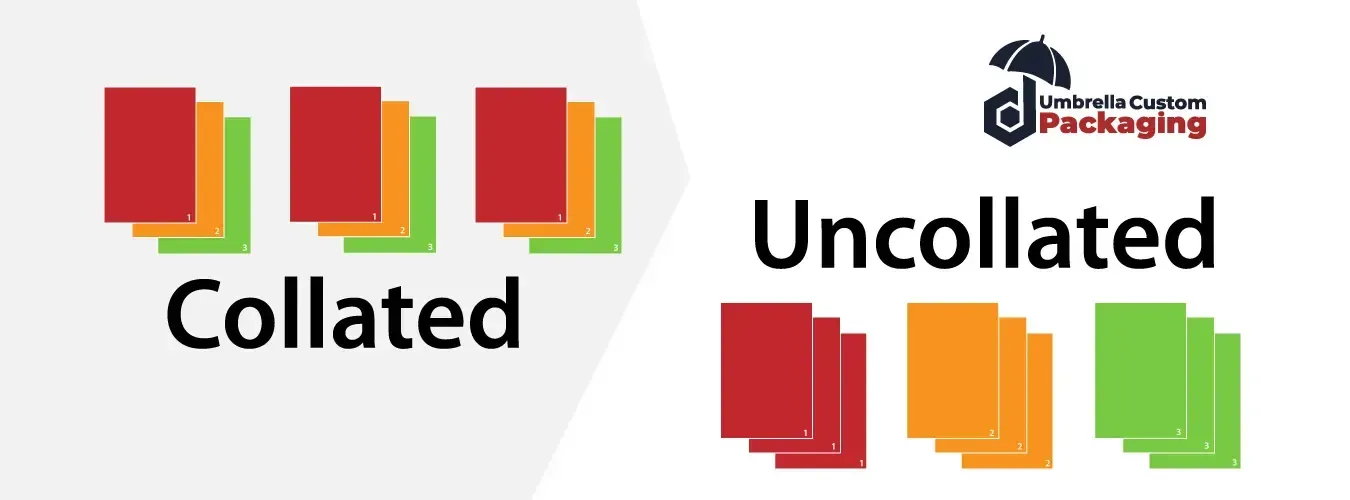
Collate simply means the printer automatically sorts your pages into complete sets for you. When you print multiple copies of a multi-page document with collate turned on, the printer prints one full copy (like pages 1 through 5 in order), then prints the next full copy, and so on.
Without collate the printer would print all copies of page 1 first, then all copies of page 2, forcing you to manually sort and assemble each set yourself.
Collate simply means the printer arranges your pages into complete sets for you. For instance, if you need three copies of a five-page report and you select collate the printer will print one full set of pages 1 through 5, then another full set, and then a third full set.
This way, you get perfect stacks you can use right away. On the other hand, if you do not select collate the printer will print three copies of page 1 first, then three copies of page 2, and continue like that until the end, so you will have to gather and arrange the pages into the correct order yourself.
You need to print 3 copies of a 3-page document (Page 1, Page 2, Page 3).
The printer creates each copy as a finished set:
Set 1: Page 1 → Page 2 → Page 3
Set 2: Page 1 → Page 2 → Page 3
Set 3: Page 1 → Page 2 → Page 3
Result: You get 3 complete stacks you can use immediately.
The printer groups all identical pages together:
All Page 1’s: Page 1 → Page 1 → Page 1
All Page 2’s: Page 2 → Page 2 → Page 2
All Page 3’s: Page 3 → Page 3 → Page 3
Result: You have to manually sort and assemble each set yourself.
Collate printing simply means arranging and printing multiple items together as one complete set. In the packaging industry, this process groups individual products into a single bundle with printed wrapping.
First, collate printing helps make variety packs. For example, it wraps 24 beer cans together in one printed plastic cover. As a result, this saves money and cuts down on waste.
Additionally, companies print nice pictures and logos on the wrap. Consequently, products look good on store shelves ,and this helps brands get noticed.
Furthermore, collate printing handles big orders fast and without mistakes. For instance, when a store chain needs different packs for each location, machines sort everything correctly without slowing down.
Finally, these machines print, pack, and get orders ready to ship all in one go. Therefore, this cuts down on manual work and makes sure the right products reach the right places every time.
Here is the difference between collated and uncollated printing.
Collate Printing | Uncollated Printing |
The printer prints each complete set one after another. | The printer prints all copies of each page together. |
You get finished stacks right away. | You get piles of the same page and must assemble them yourself. |
This method saves you time because you do not have to sort anything. | This method saves the printer time, but you have to do the extra work of sorting. |
It is best for handouts, reports, or booklets. | It is best for things like flyers or forms where you keep pages separate. |
Companies use collated printing for reports. For example, when they get ready to share quarterly reports with board members, collation gives each person a complete set with pages in the right order. This saves time during meetings and makes everything look neat and professional.
Companies also use collated printing for employee handbooks. When they print fifty copies of a twenty-page manual, collation creates fifty booklets that are ready to use. So new workers get complete guides with no pages missing.
Teachers use collated printing for tests and course packs. This way, each student gets a full set of papers at once and does not have to wait for someone to sort the pages.
Weddings and conferences use collated printing for their programs. Guests then get booklets that go in order from cover to cover without needing to put them together themselves.
Businesses make catalogs and small magazines using collated printing. The printer takes care of the entire page sorting, so the finished booklets come out ready to hand out.
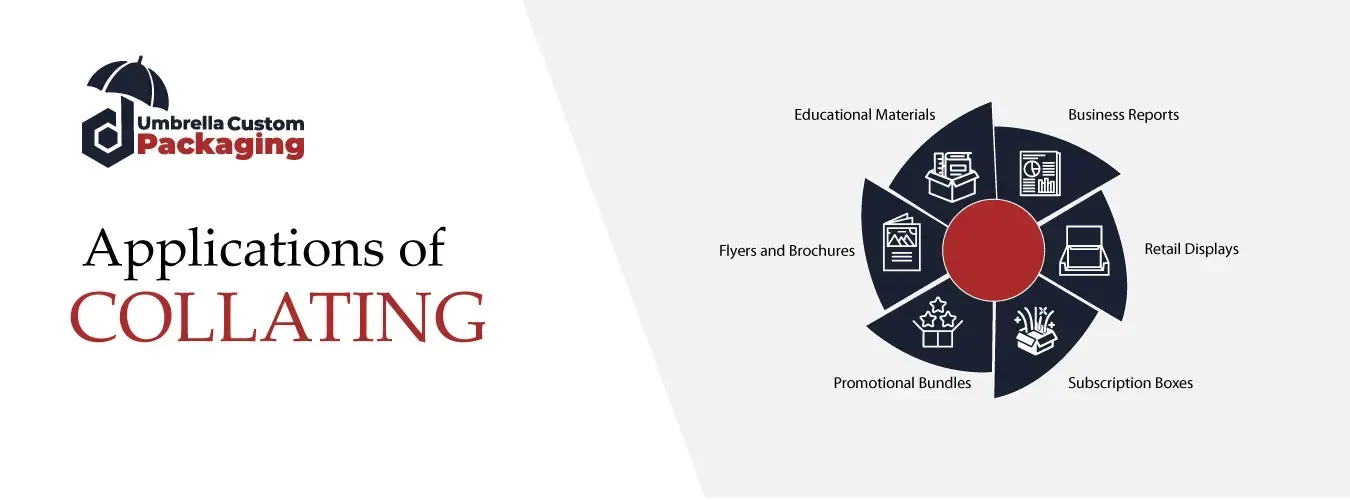
Variety Packs
Collate printing works great for variety packs. For instance, snack companies bundle different chip flavors together in one printed bag. Similarly, beverage companies combine various drinks into single multi-pack wraps.
Promotional Bundles
Businesses use collation for special offers. A coffee brand might bundle different roasts together with printed sleeves. This encourages customers to try more products.
Sample Packs
Cosmetic and food companies use collation for sample packs. They group multiple small products together with printed information. Therefore, customers can test several items at once.
Subscription Boxes
Monthly subscription services rely heavily on collation. They assemble unique product combinations for each subscriber. Additionally, they print custom packaging and ship complete sets without manual sorting.
Retail Displays
Stores receive pre-collated product bundles ready for shelves. This means employees simply open boxes and place multi-packs directly on display without extra work.
Our Expertise in Collated Printing
At our company, we use collated printing every day. We manufacture all kinds of custom products, including packaging boxes, brochures, cups, banners, displays, stickers, and labels. Collation helps us assemble multi-page brochures in the correct order so they arrive ready for your customers.
Similarly, when we create user manuals for product boxes, collation guarantees each package contains the right pages. Additionally, for promotional bundles like custom cups with printed sleeves or banner sets, collated printing ensures every piece matches perfectly.
Our clients receive professional, organized products without any sorting hassle. In short, collation helps us deliver accuracy and quality in everything we make.
Final Thought
In short, collate printing makes it easy to put multi-page papers in good order. Whether you print school projects, books, or product boxes, collation keeps everything neat and ready to use. Using this option saves time, reduces mistakes, and gives you tidy results with every print job. So next time you print many copies, just let the printer do the sorting for you, it is the smart choice.
The dimensions and design of a tissue box serve as a silent salesperson, directly capturing customer attention and influencing the crucial moment of purchase. Therefore, selecting the right size is about much more than simple measurements. It is a strategic choice that balances essential functionality with aesthetic appeal.
Ultimately, the correct proportions not only ensure the box works well but also enhance the visual harmony of any space it occupies. Here is the complete guide regarding the tissue box dimensions.
The most common standard tissue box size, often called a facial tissue cube, measures approximately 4.5 inches in width, 9 inches in length, and 5 inches in height. We designed this rectangular shape to fit most decorative tissue box holders for home use.
This makes it the default size you will find on most store shelves. While there are many variations, such as compact travel sizes or larger cube boxes, this 4.5” x 9” x 5” dimension is the industry standard for regular household tissue boxes.
Here is a clear and simple flow chart diagram to help you visualize measuring a tissue box systematically. Ultimately, this flowchart breaks down the process into two main steps: measuring the main box and measuring the opening and guides you smoothly to the final goal of finding the perfect fit.

Tissue boxes come in a few standard shapes, each with its own practical and visual appeal.
This is the classic and most popular shape. A rectangular box is longer than it is wide. This elongated design fits perfectly on narrow ledges, like a windowsill or the back of a toilet tank, and it feels very familiar to hold.
Square boxes offer a neat, balanced, and modern appearance. Because all their sides are equal in length, they tuck very neatly into square holders or the corner of a counter without sticking out awkwardly.
A cube box takes the square shape and adds significant height, creating a sturdy, substantial feel. However, this design maximizes capacity, allowing the box to hold a larger number of tissues, which is ideal for high-traffic areas.
Oval & Round Boxes
These shapes are primarily decorative. An oval or cylindrical box provides a soft, elegant look that can elevate the style of a living room or bedroom. In addition, their curved design usually requires a matching holder or a stable surface to prevent them from rolling.

In this table, we will discuss common tissue box dimensions based on their primary shape. Dimensions can vary by brand and design.
Shape | Typical Dimensions (Length x Width x Height) |
Rectangular | 9 inches x 4.5 inches x 5 inches |
Square | 5 inches x 5 inches x 5 inches |
Cube | 5.5 inches x 5.5 inches x 5.5 inches |
Oval / Cylindrical | Diameter: ~4.5 inches, Height: ~ 5 inches (varies) |
Several important factors determine the final size and shape of a tissue box.
1. Purpose & Placement
The size of a tissue box depends on where and how it will be used. For instance, we make small travel boxes to fit easily in bags, and decorative boxes for living rooms are often bigger or have a special shape. Likewise, boxes designed for cars or desks are slimmer so they can fit into tighter spots.
The number of tissues inside and how they are folded directly decide the box’s volume. A higher tissue count requires a taller or wider box. In addition, pop-up tissues need a certain height to function, while flat C-fold tissues allow for shorter box designs.
Branding and visual appeal play a big role. Often, luxury brands use cube or oval shapes for a premium look, while standard brands stick to efficient rectangles. Furthermore, unique designs for holidays or events may use non-standard dimensions to stand out.
How boxes are shipped and sold affects their size. Manufacturers often design boxes to fit efficiently on store shelves and in shipping cases. Therefore, a standard dimension has become common because it optimizes logistics and display.
In short, tissue box dimensions are a balance of function, content, style, and logistics.
At Umbrella Custom Packaging, we design and create custom tissue boxes that go beyond the ordinary. We turn your vision into a tangible product that adds style, personality, and purpose to any space.
Branded Tissue Boxes: We print your company logo, colors, and message on high-quality boxes, turning everyday items into effective marketing tools.
Event & Wedding Tissue Boxes: However, we create beautiful designs to match your theme, color palette, or special date, adding a thoughtful touch to your celebration.
Personalized Gift Boxes: Moreover, we help you design unique boxes for birthdays, holidays, or housewarmings that feel personal and special.
Bespoke Designs: From shape to finish, we work with you to create a completely custom look that stands out.
Choosing the right size is not just about numbers: it is a smart business move. Working with a packaging expert helps you mix your brand's look with a design that actually works well. We also help you create a great unboxing experience while keeping production affordable. Moreover, we make sure your tissue box looks beautiful and is easy for customers to use. In short, we help you create tissue boxes that people notice and remember.
The Bottom Line
In short, a tissue box's size really matters. It shows how useful, attractive, and well-designed it is. Whether you choose a common rectangle or a custom shape, the right size is important for both function and style.
In other words, by thinking about where the box goes, how it works, and how it looks, you create more than just a holder for tissues. Ultimately, you create something that fits nicely into any space and shows thoughtfulness and quality.
We offer Packaging Boxes delivered to your door. Secure, professional, and affordable, our custom made packaging boxes are guaranteed to protect and transport your valuable items. Our devoted team is always there to serve you.
















Our Secure Payment Modes
© 2026 Umbrella Packaging All rights reserved.