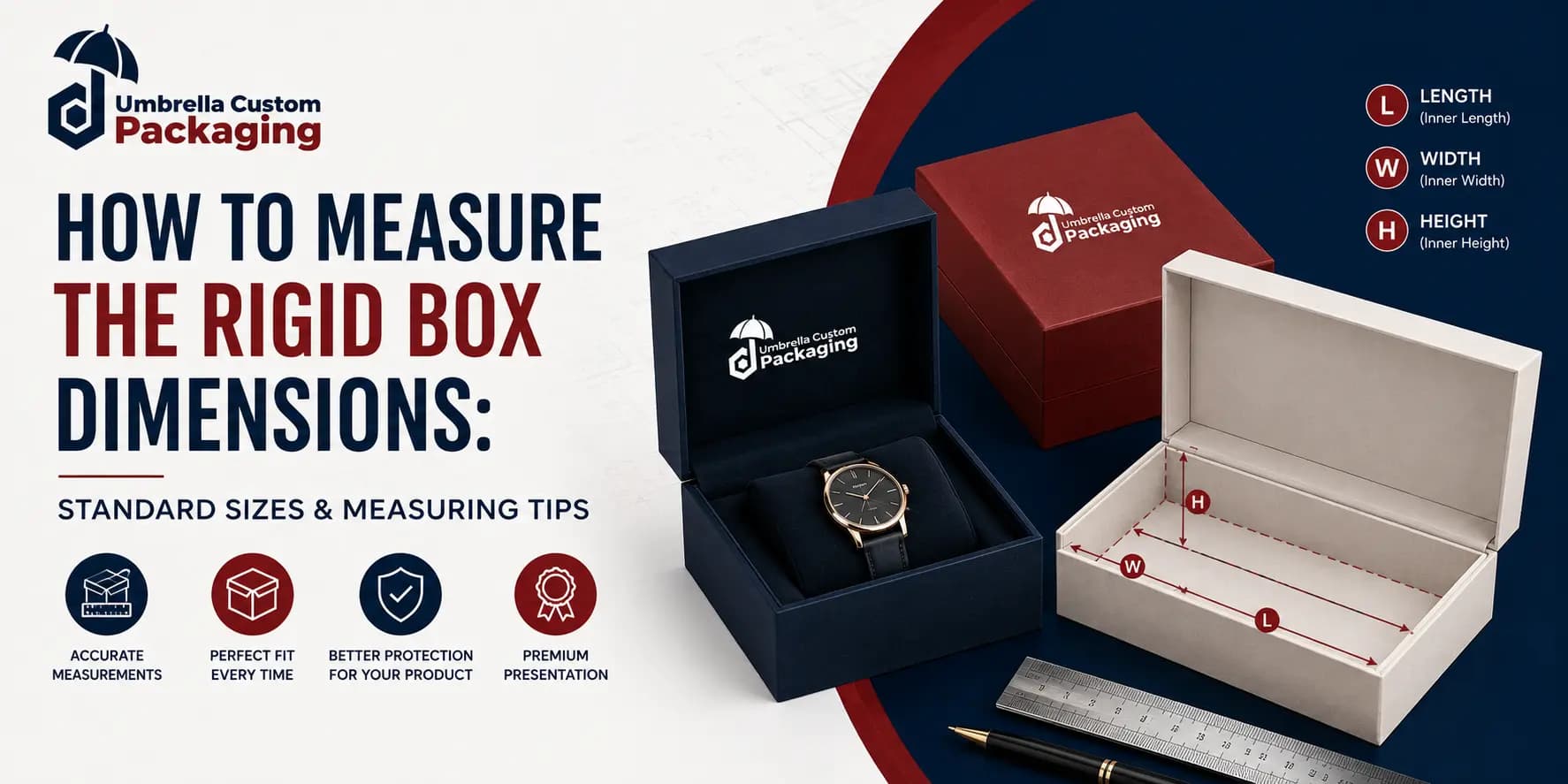
Luxury products deserve premium packaging, and rigid boxes are one of the best choices for creating a memorable customer experience. Unlike folding cartons, we make rigid boxes from thick paperboard that keeps its shape and offer excellent protection. They are widely used for jewelry, cosmetics, electronics, perfumes, watches, apparel, premium food, and gift packaging.
However, even the most beautiful rigid box can become a problem if its dimensions are incorrect. A box that is too small may damage your product, while one that is too large can increase shipping costs and reduce the premium look of your packaging.
Understanding rigid box dimensions helps you choose the perfect fit for protection, presentation, and cost efficiency.
Rigid box dimensions refer to the inside measurements of a rigid box. These measurements determine the amount of usable space available for your product.
Most packaging manufacturers measure rigid boxes in this order:
Length × Width × Height (L × W × H)
Each measurement has a specific purpose.
For example, if a rigid gift box measures:
10 × 8 × 3 inches
it means:
These measurements are usually based on the internal dimensions because your product fits inside the box, not around it.
Choosing the correct box dimensions is about much more than making your product fit. The right size improves product protection, enhances the customer experience, reduces packaging costs, and supports efficient shipping.
Here are the biggest reasons why dimensions matter.
Measuring a rigid box is simple when you follow the correct sequence.
Place the box on a flat surface. Measure the longest side of the opening from one inside wall to the opposite inside wall. This measurement represents the length.
Next, measure the shorter side of the opening. Always measure from the inside edge to the opposite inside edge. This gives you the width.
Now measure from the bottom of the inside of the box to the top edge. This measurement is called the height or depth.
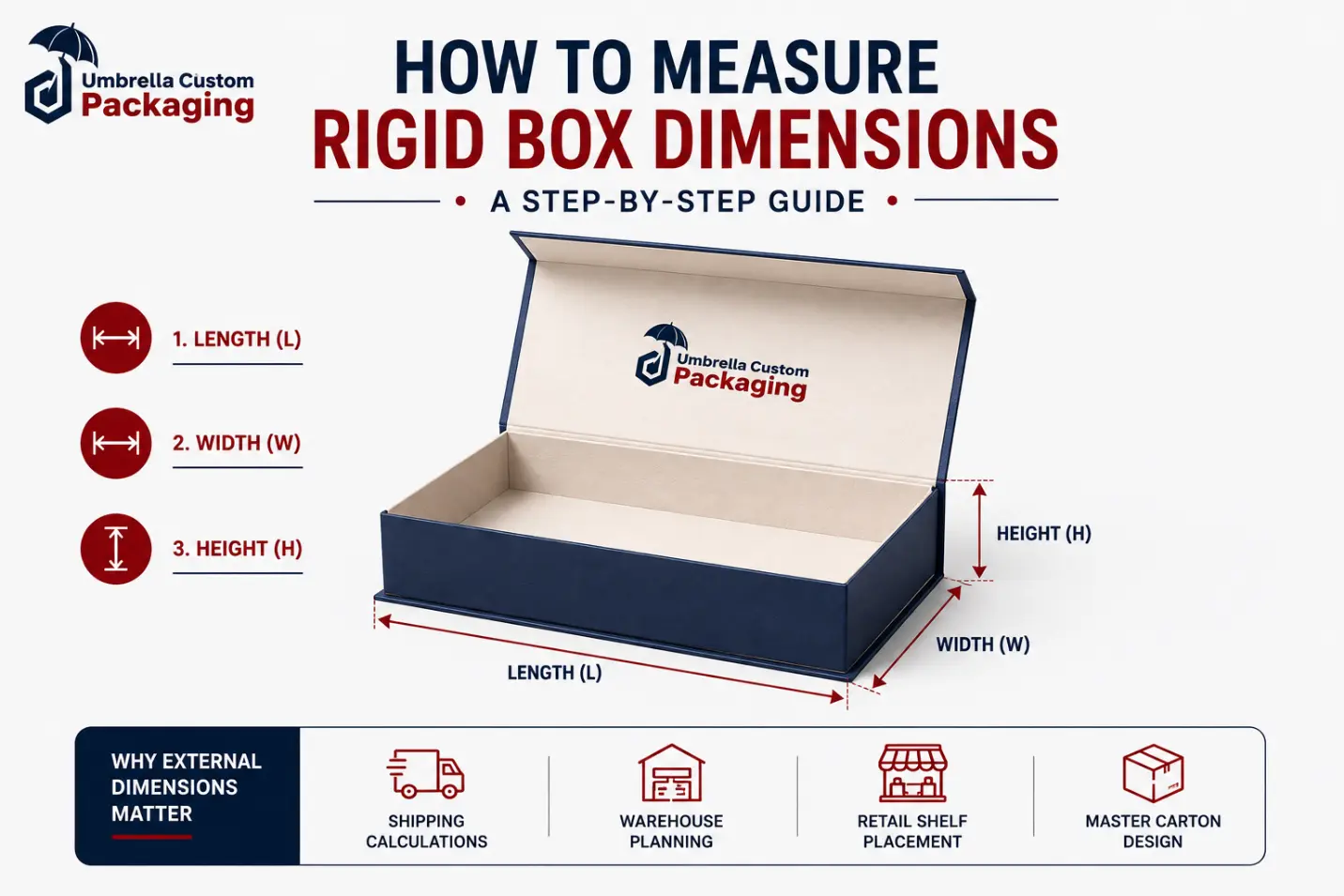
Every rigid box follows the same order:
Length × Width × Height
For example:
Maintaining this order helps manufacturers avoid confusion during production.
If you are ordering custom rigid boxes, always provide your packaging supplier with:
This allows the manufacturer to calculate the ideal internal and external box dimensions for your packaging project.
What Material Is Used for Rigid Boxes?
Rigid boxes are manufactured using thick paperboard, commonly referred to as chipboard or greyboard. Unlike folding cartons, rigid boxes do not collapse after production, making them stronger and more durable for luxury products.
The rigid board is wrapped with printed paper, specialty paper, textured paper, kraft paper, or premium finishes to achieve the desired appearance.
The most commonly used wrapping materials include:
Each material offers a different look and feel while maintaining the structural strength of the rigid box.
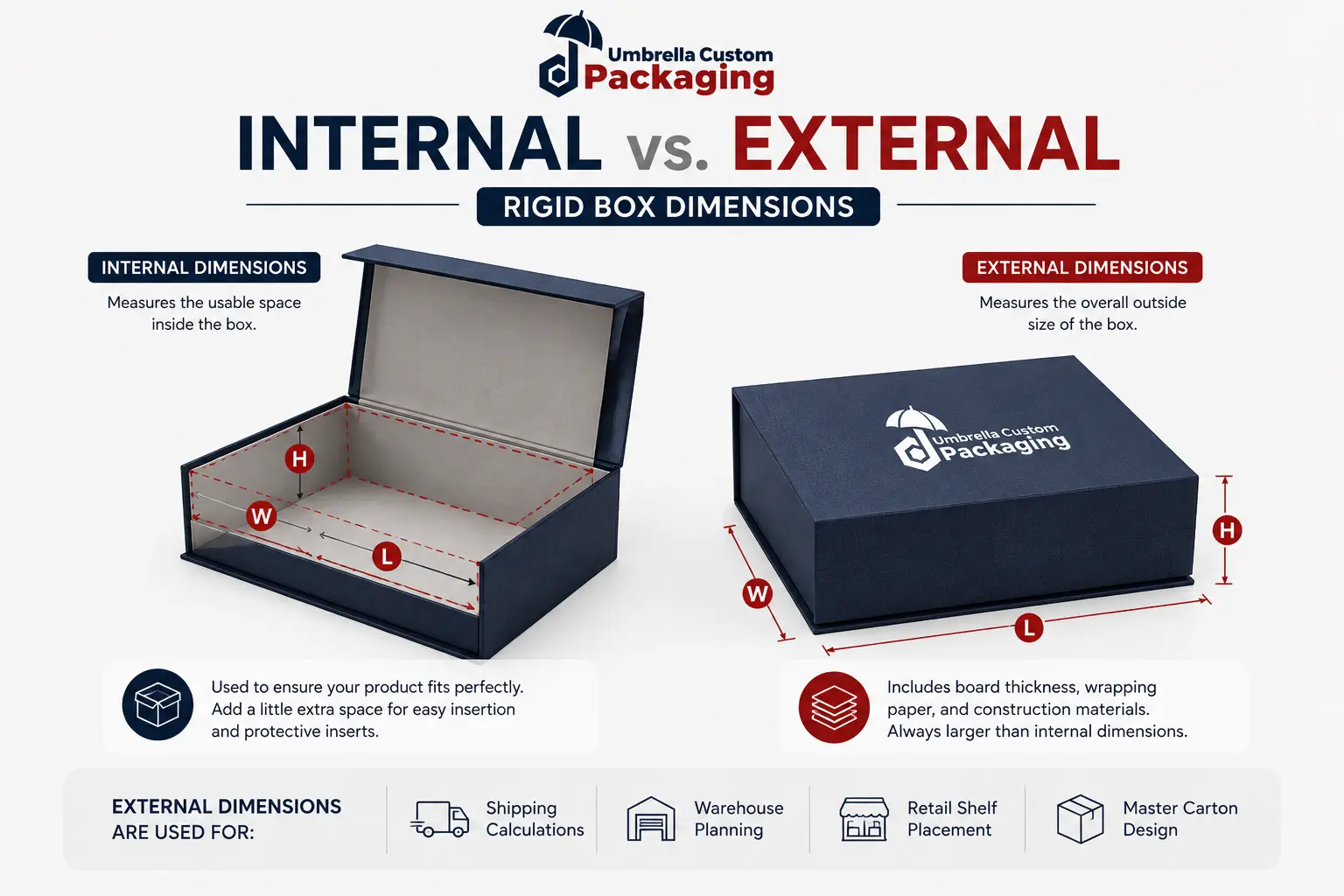
One of the most common mistakes businesses make is confusing internal dimensions with external dimensions.
|
Internal Dimensions |
External Dimensions |
|
Measure the usable space inside the rigid box to ensure the product fits properly. |
Measure the overall outside size of the rigid box, including the board thickness and wrapping materials. |
|
Used to determine the correct product fit, insert placement, and required clearance. |
Used for shipping calculations, warehouse storage, retail shelf placement, and master carton design. |
Example: For an 8 × 5 × 2 inch product, the internal dimensions should be slightly larger, while the external dimensions will be larger than the internal size because of the board thickness and construction materials.
Many businesses assume the product and box should have exactly the same dimensions. In reality, a small amount of clearance is necessary.
A general guideline is to leave approximately 1/16 to 1/8 inch (1.5–3 mm) of internal clearance on each side. This allows the product to fit comfortably, accommodates inserts if required, and makes packing easier without compromising the premium feel.
For fragile items such as glass perfume bottles, candles, and electronics, additional space may be needed to accommodate protective foam or molded inserts.
Board thickness plays an important role in the durability and appearance of rigid packaging. A thicker board creates a stronger and more luxurious box but also increases the external dimensions slightly.
|
Board Thickness |
Common Applications |
|
1 mm |
Lightweight retail products |
|
1.5 mm |
Cosmetics and small gift boxes |
|
2 mm |
Electronics, perfumes, apparel |
|
2.5 mm |
Luxury gift packaging |
|
3 mm |
Premium rigid boxes |
|
4 mm |
High-end presentation boxes |
Below are some of the most common rigid board thicknesses used in the packaging industry.
For most luxury packaging projects, 2–3 mm greyboard provides the ideal balance between strength, appearance, and cost.
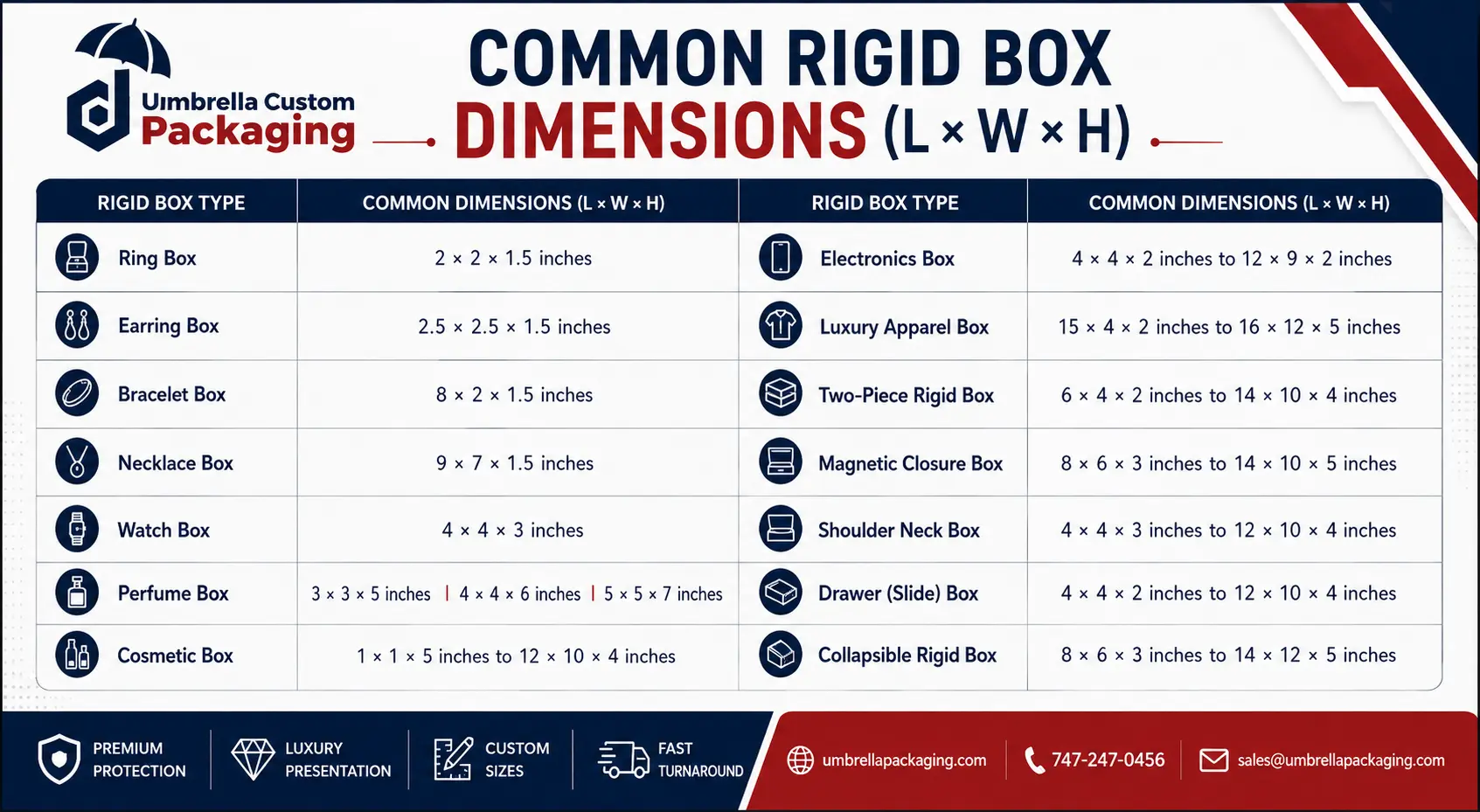
There is no single standard size for rigid boxes because every product has unique dimensions. A luxury watch requires a compact and sturdy box, while a premium shoe box needs much more internal space. The right rigid box size depends on the product's dimensions, weight, inserts, and presentation style.
Instead of selecting a box first, packaging manufacturers usually begin by measuring the product and then design a custom rigid box around it. This approach ensures the product fits securely, minimizes movement during shipping, and creates a premium unboxing experience.
Below are some of the most commonly used rigid box dimensions across different industries.
Rigid Box Dimensions for Jewelry Packaging
Rigid boxes are widely used for jewelry packaging because they provide superior protection while enhancing the product's luxury appeal. Premium inserts such as velvet, satin, EVA foam, and paperboard, along with magnetic closures, help keep jewelry secure and create an elegant unboxing experience.
Rigid Box Dimensions for Watches
Luxury watch boxes are designed to protect valuable timepieces while enhancing their presentation. These boxes often include velvet cushions, EVA foam inserts, magnetic closures, and ribbon pull tabs to create a secure fit and an elegant unboxing experience.
Perfume bottles vary in shape and capacity, so custom sizing is essential to ensure a perfect fit and maximum protection. For glass bottles, foam or molded paper inserts are commonly added to prevent breakage during shipping and handling.
Rigid boxes are widely used for luxury cosmetics, skincare products, and beauty gift sets because they offer premium presentation and excellent product protection. Custom inserts help organize multiple products while improving the overall unboxing experience.
Consumer electronics require rigid boxes that provide both durability and a premium appearance. Products such as smartphones, earbuds, tablets, smartwatches, and power banks are commonly packaged in rigid boxes ranging from 4 × 4 × 2 inches to 12 × 9 × 2 inches. Precision-cut foam inserts are often included to keep delicate devices secure during transportation.
Luxury apparel brands use rigid boxes to deliver a premium shopping experience while protecting clothing during storage and shipping. Common sizes range from 15 × 4 × 2 inches for ties to 16 × 12 × 5 inches for luxury gift sets. Many brands also enhance these boxes with tissue paper, ribbons, thank-you cards, and branded inserts to create a memorable unboxing experience.
Two-piece rigidboxes feature a separate lid and base, making them one of the most popular packaging styles for luxury products. These boxes are commonly used for gift packaging, cosmetics, apparel, confectionery, and premium retail products.
Magnetic closure rigid boxes combine functionality with an elegant appearance, making them a preferred choice for luxury brands. Their concealed magnetic closures provide a secure seal while delivering a sophisticated unboxing experience for gifts, cosmetics, electronics, and corporate packaging.
Shoulder neck rigid boxes feature a raised inner tray positioned between the lid and base, creating a premium layered design. They are commonly used for watches, perfumes, jewelry, luxury candles, and cosmetics, with sizes ranging from 4 × 4 × 3 inches to 12 × 10 × 4 inches. This construction improves product presentation while adding extra strength and durability.
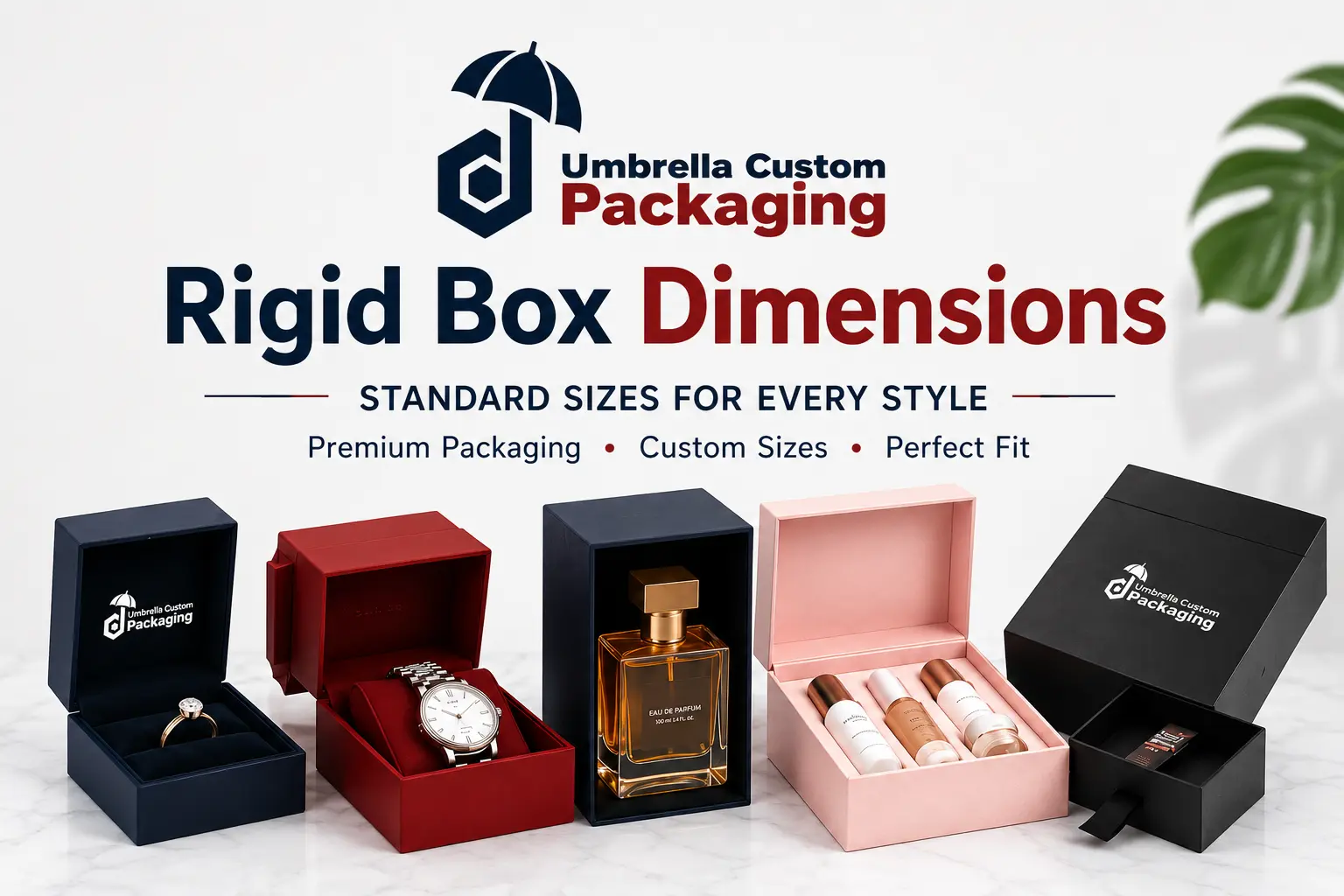
Drawer-style rigid boxes, also known as slide-out boxes, provide a unique and luxurious opening experience. Most drawer boxes feature ribbon pulls or finger notches that allow customers to slide the inner tray out smoothly while enhancing the overall presentation.
Collapsible rigid boxes offer the premium look of traditional rigid packaging while folding flat for convenient storage and shipping. They are an excellent choice for e-commerce businesses because they reduce storage space and shipping costs without compromising quality or appearance.
Many businesses only measure their product and overlook the thickness of the rigid board. This can lead to fitting issues during production.
For example, if two boxes have identical internal dimensions but different board thicknesses, their external dimensions will not be the same.
A thicker board increases the outer size of the box while keeping the usable internal space unchanged.
This difference is important when planning:
Your packaging supplier should always calculate both internal and external dimensions during the design process.
How Inserts Affect Rigid Box Dimensions
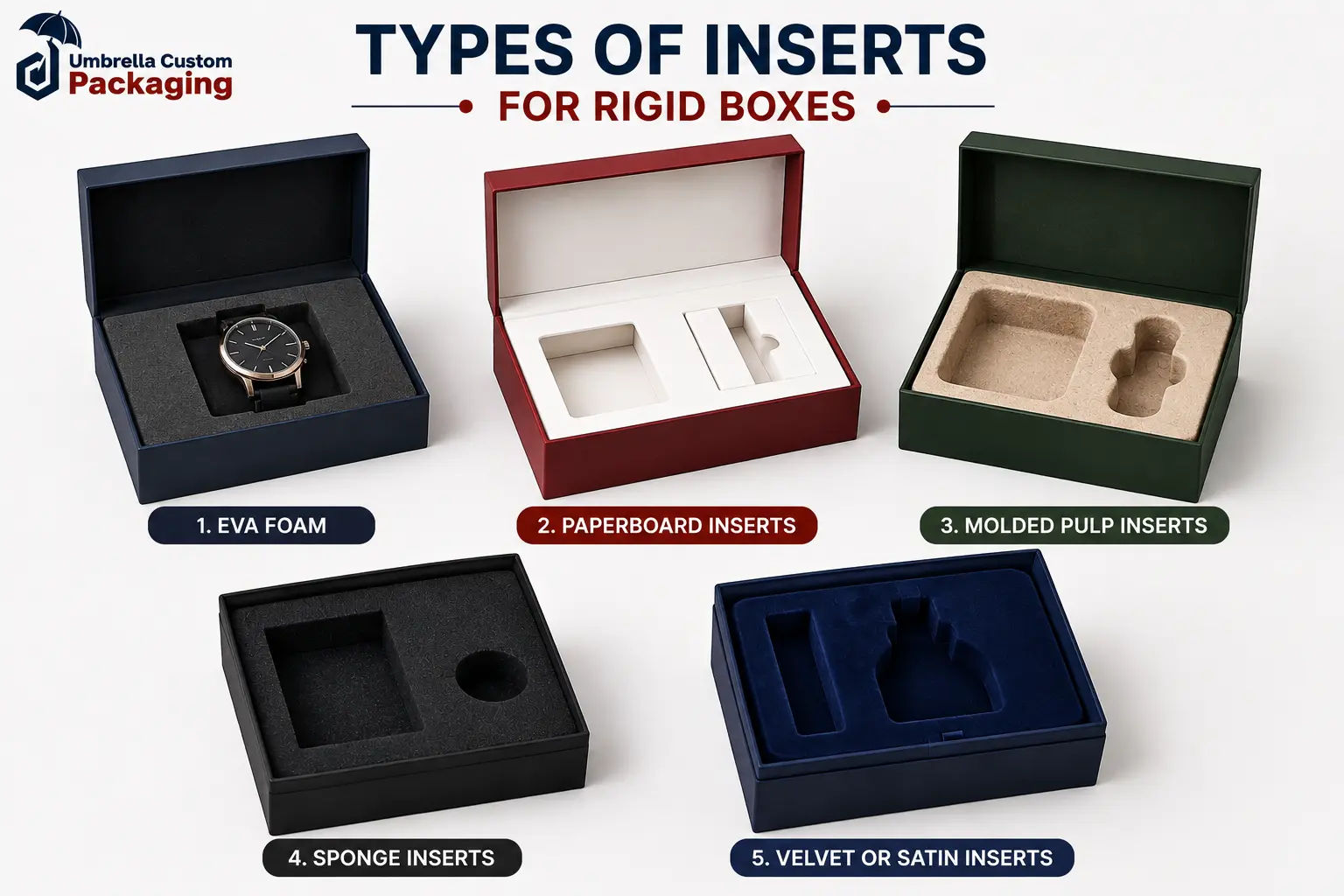
Luxury rigid boxes often include inserts that hold products securely and improve the unboxing experience. Because inserts occupy internal space, they must be considered before finalizing box dimensions.
Common insert materials include:
Common Mistakes When Choosing Rigid Box Dimensions
Many packaging issues arise because businesses make simple sizing mistakes. Avoiding these errors can save time, reduce production costs, and prevent product damage.
Why Choose Umbrella Custom Packaging for Custom Rigid Boxes?
At Umbrella Custom Packaging, we manufacture custom rigid boxes for businesses across the United States, helping brands create packaging that protects products and enhances their shelf appeal. From luxury retail boxes to premium presentation packaging, every project is designed around your exact product dimensions rather than using generic stock sizes.
Our team works closely with you to determine the ideal box dimensions, board thickness, inserts, and finishing options, ensuring your packaging delivers both functionality and a memorable unboxing experience.
Whether you need two-piece rigid boxes, magnetic closure boxes, shoulder-neck boxes, drawer boxes, or collapsible rigid boxes, we provide fully customized solutions with high-quality printing, premium materials, and fast turnaround times from our Los Angeles-based operations.
Selecting the right rigid box dimensions is about more than making your product fit inside a box. Accurate measurements improve protection, reduce shipping costs, enhance presentation, and create a better customer experience.
Before placing your order, measure the finished product carefully, account for inserts and clearance, and choose a board thickness that matches your product's weight and brand image. Working with an experienced packaging manufacturer helps you avoid costly mistakes and ensures every box reflects the quality of your product.
Whether you need luxury packaging for jewelry, cosmetics, electronics, candles, apparel, or corporate gifts, investing in properly sized custom rigid boxes is a smart decision that strengthens both your brand image and customer satisfaction.
If you are choosing the right Mylar bag size for your product, the best option depends on the product's weight, dimensions, and required headspace. Small bags like 3" × 4" are ideal for samples and herbs, medium sizes such as 5" × 8" work well for snacks and coffee, while larger bags like 10" × 14" or 12" × 16" are commonly used for bulk foods, pet treats, apparel, and industrial products. There is no single "standard" Mylar bag size because every product has a different density and packaging requirement. The correct bag should comfortably hold the product while leaving enough room for sealing, branding, and product protection. What Are Mylar Bags? Mylar bags are strong packaging bags that help keep products fresh and safe. They are made from different layers of materials like plastic and aluminum. These layers protect products from air, moisture, light, dust, and bad smells. Many businesses use Mylar bags to pack food, coffee, vitamins, cosmetics, pet treats, cannabis products, medicines, and many other items. They also have a smooth surface that allows colorful printing, helping brands make their products look attractive on store shelves. Why Is Choosing the Right Mylar Bag Size Important? Picking the right Mylar bag size is very important. It is not only about the product's weight. Some products are light but take up more space, while others are small and heavy. For example, coffee beans, protein powder, cookies, dried fruits, and pet treats all need different bag sizes. The right bag keeps the product safe, makes sealing easier, and gives it a neat and professional look. It also reduces extra empty space, protects the product during shipping, and helps it stay fresh until it reaches the customer. Mylar Bag Dimensions Explained Every Mylar bag is measured using three primary dimensions: Width × Height × Gusset For example: 6" × 9" × 3.5" means: Width = 6 inches Height = 9 inches Bottom gusset = 3.5 inches The gusset expands after filling, allowing the pouch to stand upright while increasing storage capacity. Flat bags generally use only width and height measurements because they do not contain a bottom gusset. Common Mylar Bag Sizes and Their Ideal Applications Mylar Bag Category Common Sizes Description Typical Products Small Mylar Bags 3" × 4", 3.5" × 5", 4" × 6 Compact bags ideal for lightweight products, samples, and promotional items. They save material while providing excellent moisture and oxygen protection Herbs, tea, coffee samples, bath salts, jewelry, cosmetics, spices, seeds, powdered supplements Medium Mylar Bags 5" × 8", 6" × 9", 6" × 10", 7" × 10", 8" × 10", 8" × 12" The most versatile size range for retail packaging, offering enough space for branding, labels, and stand-up display. Coffee, cookies, dried fruit, granola, pet treats, protein powder, cereal, rice, flour, popcorn, candy Large Mylar Bags 9" × 13", 10" × 14", 10" × 16", 12" × 16", 14" × 20", 16" × 24" Designed for bulk packaging and high-volume storage, with larger capacities and enhanced shelf stability. Rice, cereal, pet food, flour, snacks, bulk candy, apparel, industrial products, emergency food storage. How Product Density Affects Mylar Bag Size Product density plays a major role in selecting the right Mylar bag size because products with the same weight can occupy very different amounts of space. For example, coffee beans, protein powder, dried fruit, candy, rice, and pet treats may all weigh 8 oz, but each requires a different pouch size due to its shape and volume. Performing a fill test before placing a bulk order helps ensure the chosen bag size provides the best fit, protection, and presentation for your product. How To Measure A Mylar Bag Correctly Choosing the right Mylar bag starts with accurate measurements. Whether you are ordering standard pouches or custom-printed packaging, knowing how to measure the bag correctly helps prevent sizing issues during production and filling. For stand-up pouches, manufacturers usually measure three dimensions: Width × Height × Bottom Gusset For example: 6" × 9" × 3.5" means: Width = 6 inches Height = 9 inches Bottom gusset = 3.5 inches The width is measured from one side of the pouch to the other when it is lying flat. The height is measured from the bottom seal to the top opening, excluding any tear notch or hanging hole. The gusset is measured across the folded bottom section that expands once the pouch is filled. If you are replacing an existing package, measure the empty pouch rather than estimating from the product inside. This provides much more accurate dimensions for reordering. Mylar Bag Sizes By Product Type Different industries require different pouch dimensions because products vary significantly in shape, density, and storage requirements. Product Type Common Products Recommended Mylar Bag Sizes Simple Reason Coffee Coffee beans, ground coffee 5" × 8", 6" × 9", 7" × 10", 8" × 12" Coffee releases gas after roasting, so these bags often have a one-way valve to keep it fresh. Protein Powder Protein supplements 6" × 9", 7" × 10", 8" × 12", 10" × 14" Protein powder is light and takes up more space, so larger stand-up bags work best. Cannabis Products Dried flower, edibles 3" × 4", 3.5" × 5", 4" × 6", 5" × 8" These bags are smell-proof and often have child-safe zippers for safety Gummies Candy gummies, vitamin gummies 3.5" × 5", 4" × 6", 5" × 7" Leave a little empty space in the bag so the gummies do not stick together. Pet Treats Dog treats, cat treats 6" × 9", 7" × 10", 8" × 12", 10" × 14" Pet treats have different shapes, so they need bigger bags. Mylar Bag Thickness Guide Size is only one part of choosing the right pouch. Thickness also affects durability and product protection. Most custom Mylar bags are available in: Thickness Common Applications 3 Mil Samples 4 Mil Snacks 5 Mil Coffee 6 Mil Supplements 7 Mil Heavy Products 8 Mil Long-term storage Thicker bags provide: Better puncture resistance Increased durability Improved moisture protection Higher oxygen barrier Longer shelf life However, they also increase packaging cost Classification Of Mylar Bags Based On Style Flat Bags Flat Mylar bags are simple and thin pouches that work well for small products like herbs, samples, and small snacks. They are affordable, easy to fill, and take up very little storage space. Stand-Up Pouches Stand-up pouches have a bottom that allows them to stand on shelves. They hold more products, provide more space for printing, and make products look attractive in stores. Side Gusset Bags Side gusset Mylar bags expand from the sides, making them ideal for coffee, tea, pet food, and other bulk products. They offer extra storage space while keeping a neat and professional appearance. Flat Bottom Bags Flat bottom Mylar bags have a strong, flat base that helps them stand upright. They can hold heavier products, offer more room for branding, and give products a premium look. Smell-Proof Mylar Bags Smell-proof Mylar bags are made with special barrier layers and airtight closures that help lock in odors and keep products fresh. They are commonly used for coffee, herbs, tea, spices, pet treats, and cannabis products. Child-Resistant Mylar Bags Child-resistant Mylar bags include special locking zippers that are difficult for children to open but easy for adults to use. They are commonly used for cannabis products, gummies, medicines, and supplements to improve safety. Heat Seal Mylar Bags Heat seal Mylar bags are sealed using heat to create an airtight closure. This helps keep products fresh for longer, protects them from tampering, and extends their shelf life. Resealable Zipper Mylar Bags Resealable zipper Mylar bags can be opened and closed many times without damaging the package. They make it easy for customers to use the product, keep it fresh after opening, and store it safely. How Much Headspace Should A Mylar Bag Have? Headspace refers to the empty space left above the product after filling. Leaving adequate headspace helps: Create strong heat seals Prevent product crushing Improve shelf appearance Reduce leakage Protect contents during shipping A general guideline is to leave approximately 10–20% of the pouch height unfilled, depending on the product. Powders, coffee beans, and fragile snacks often require more headspace than dense items. Custom Mylar Bag Sizes Standard sizes work for many products, but custom dimensions provide a better fit for unique packaging requirements. Businesses often choose custom-sized Mylar bags when they need: A specific product capacity Distinctive shelf presentation Reduced excess packaging Improved shipping efficiency More space for branding Better compatibility with automated filling equipment Custom pouches can also be tailored with features such as rounded corners, tear notches, hang holes, matte or gloss finishes, spot UV, soft-touch lamination, transparent windows, and custom zipper placements. How To Choose The Right Mylar Bag Size Selecting the right pouch involves more than simply matching product weight. A well-sized Mylar bag protects the contents, presents the product professionally, and reduces unnecessary material costs. When choosing a pouch, consider the following: Product dimensions Product density Weight Filling method Headspace requirements Shelf presentation Shipping method Required barrier protection For example, a dense product like sugar occupies less space than an equal weight of popcorn or dried fruit. Similarly, fragile products often need additional room to prevent crushing during transport. Testing your product in several sample pouch sizes before placing a large production order is one of the best ways to determine the ideal dimensions. Common Mistakes When Choosing Mylar Bag Sizes Many businesses experience packaging problems because they overlook important sizing considerations. Avoiding these common mistakes can save both time and money. · Choosing A Bag Based Only On Weight Weight does not always indicate how much space a product requires. Two products weighing the same can occupy very different volumes. · Ignoring Product Shape Products with irregular shapes, such as cookies, pet treats, or dried fruit, require larger pouches than powders or liquids of similar weight. · Forgetting About Headspace Filling a pouch to the top leaves little room for sealing and may affect product presentation. Adequate headspace helps protect the contents and creates a clean, professional appearance. · Selecting The Wrong Pouch Style A flat pouch may work well for samples, but a stand-up pouch offers better shelf visibility for retail products. Choosing the correct style is just as important as choosing the correct size. · Ordering Without A Sample Test Every product behaves differently inside a pouch. Testing several sample sizes before mass production reduces the risk of incorrect packaging. Benefits Of Custom Mylar Bag Sizes Although standard pouch sizes are suitable for many products, custom dimensions provide several advantages for growing brands. Custom-sized Mylar bags help businesses: Minimize unused space inside the package. Improve product presentation. Reduce packaging material waste. Lower shipping costs. Create a distinctive retail appearance. Increase brand recognition. Fit automated filling equipment more efficiently. Custom dimensions also allow businesses to incorporate premium features such as rounded corners, euro holes, tear notches, resealable zippers, transparent windows, matte finishes, gloss coatings, and metallic effects. Industries That Commonly Use Mylar Bags Mylar bags have become one of the most versatile flexible packaging solutions available today. Their excellent barrier properties make them suitable for a wide range of industries. Some of the most common applications include: Coffee and tea Snack foods Candy and chocolates Spices and herbs Protein powders Nutritional supplements Pet food and treats Cosmetics Personal care products Pharmaceuticals Cannabis products Electronics Industrial components Emergency food storage Seeds and gardening supplies Each industry has unique packaging requirements, making custom sizing an important part of the packaging design process. Order Custom Mylar Bags From Umbrella Custom Packaging! At Umbrella Custom Packaging , we manufacture premium custom Mylar bags in virtually any size, style, and finish to meet your product requirements. Whether you need flat pouches, stand-up pouches, child-resistant bags, smell-proof packaging, or fully customized retail solutions, our team can help you find the perfect fit. We offer: Custom sizes and shapes High-definition printing Matte, gloss, and soft-touch finishes Resealable zipper closures Tear notches and hang holes Metallic and holographic effects Food-grade materials Low minimum order quantities Competitive wholesale pricing Fast turnaround times Contact Umbrella Custom Packaging today to discuss your packaging needs and receive a free quote for custom Mylar bags designed specifically for your products. Final Thoughts Selecting the right Mylar bag size is an important step in creating effective product packaging. While standard dimensions work well for many applications, every product has unique characteristics that influence the ideal pouch size. Factors such as product density, shape, filling method, and required headspace should all be considered before choosing a package. Taking the time to evaluate these factors, helps improve product protection, reduce shipping costs, enhance shelf presentation, and create a better customer experience. Whether you need compact sample pouches or large bulk storage bags, the correct size contributes to both functionality and brand appeal.
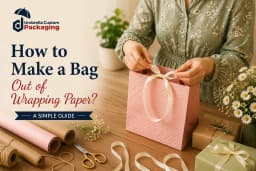
A handmade gift bag can make a simple present feel more thoughtful and personal. Instead of buying a ready-made bag, you can turn leftover wrapping paper into attractive packaging within a few minutes. This easy project also helps you use extra paper that might otherwise go to waste. Learning how to make a bag out of wrapping paper can help when you have an unusual gift shape, run out of gift bags, or want packaging that matches your wrapping theme. Materials You Will Need Before you begin, collect everything in one place. This step saves time and helps you complete each fold without stopping halfway. Wrapping paper Scissors Ruler Tape Glue stick Hole punch Ribbon or string Cardboard piece Decorative items Choose the Right Wrapping Paper Choosing the right wrapping paper is important because it affects both the strength and appearance of your gift bag . Use thick wrapping paper for heavier gifts like books, candles, and cosmetics, while standard paper works well for lightweight items. You should also check that the pattern or design faces the correct direction and avoid paper with tears or deep creases. Finally, choose a design that matches the occasion, such as floral prints for birthdays, festive patterns for holidays, or elegant designs for weddings and business gifts. Systematic Guide to Make a Bag Out of Wrapping Paper Making a wrapping paper bag is quick and easy. Follow these simple steps to create a neat and sturdy gift bag. Step 1: Measure the Wrapping Paper Measure your gift and cut the wrapping paper, leaving 2–3 inches of extra space for folding and sealing. Step 2: Fold the Sides Fold both long edges toward the center, overlap them slightly, and secure with tape or glue to form the bag. Step 3: Create the Bottom Fold the bottom edge upward, and then open it into a diamond shape to create the base of the bag. Step 4: Fold the Bottom Flaps Fold both flaps toward the center and seal them with tape or glue. Add cardboard inside for extra strength if needed. Step 5: Shape the Bag Open the bag carefully and press the side folds inward to create the classic gift bag shape. Step 6: Fold the Top Edge Fold the top edge down about one inch to strengthen the opening and give the bag a clean finish. Step 7: Add Handles Punch holes near the top, thread ribbon or cord through them, and tie secure knots to create sturdy handles. Step 8: Decorate the Bag Finish your bag by adding ribbons, bows, gift tags , stickers, or your company logo for a personalized touch. Common Mistakes to Avoid Making a wrapping paper bag is simple, but a few small mistakes can affect its appearance and durability. Using thin wrapping paper, measuring incorrectly, making uneven folds, or using weak tape can result in a bag that tears easily or looks untidy. Likewise, forgetting to reinforce the bottom, placing heavy items inside, attaching weak handles, or ignoring the pattern direction can reduce the bag's strength and overall presentation. By choosing quality materials, measuring carefully, and following each step correctly, you can create a gift bag that is sturdy, attractive, and perfect for any occasion. Creative Ways to Use Wrapping Paper Bags Wrapping paper bags are useful for many purposes beyond gift wrapping. Here are some creative ways to use them: · Gift Packaging Use them to wrap gifts for birthdays, weddings, holidays, and other special occasions. · Party Favor Bags Fill them with candies, chocolates, or small gifts for party guests. · Retail Packaging Package lightweight products like jewelry, candles, cosmetics, and stationery with a branded touch. · Holiday Gift Bags Create festive bags for Christmas, Easter, Halloween, Valentine's Day, and New Year gifts. · Wedding and Event Packaging Decorate them with ribbons and tags to hold wedding favors or event souvenirs. · School Projects Use them for classroom activities, craft projects, and science fairs. · Home Organization Store small items such as stationery, greeting cards, craft supplies, or toys in decorative paper bags. DIY Wrapping Paper Bag vs. Custom Printed Paper Bags Both handmade wrapping paper bags and custom printed paper bags have their advantages. The right choice depends on your purpose, budget, and the number of bags you need. Feature DIY Wrapping Paper Bag Custom Printed Paper Bag Cost Low for small quantities More economical for bulk orders Customization Limited to available wrapping paper Fully customized with logo, colors, and design Durability Suitable for light gifts Stronger materials for everyday use Appearance Handmade and creative Premium and professional Best For Personal gifts and special occasions Retail stores, events, and branded packaging If you only need one or two gift bags, making them at home is a fun and budget-friendly option. However, if you own a business, custom printed paper bags provide better durability, consistent branding, and a more professional presentation. Why Businesses Choose Custom Paper Bags While handmade wrapping paper bags are ideal for personal gifts, businesses often need packaging that reflects their brand. Custom paper bags help create a memorable shopping experience while protecting products during transport. At Umbrella Custom Packaging , we manufacture premium custom paper bags in different sizes, materials, and finishes to meet your packaging needs. Whether you need luxury shopping bags, retail paper bags, gift bags, or promotional bags, our team can customize every detail to match your brand. We offer: Custom sizes and styles Kraft and premium paper materials Matte, gloss, and soft-touch finishes Gold and silver foil stamping Spot UV coating Embossing and debossing Full-color logo printing Eco-friendly packaging options Final Thoughts! Making a gift bag out of wrapping paper is a fun, easy, and budget-friendly way to present your gifts. It is perfect for personal use, last minute gifting, or adding a creative touch to small presents. Moreover, it helps you recycle leftover paper, which is good for the environment too. However, if you run business, handmade bags may not be the best choice. They are not very durable and cannot be made in large numbers. For professional packaging, custom printed-paper bags are a better option because they are stronger; look more polished, and help build your brand. Choose the method that fits your needs best.
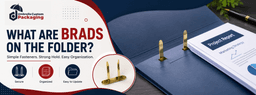
Folders help people keep papers neat and organized. However, loose papers can easily fall out or get mixed up. That is why many schools, offices, and businesses use folders with brads. These small fasteners hold papers firmly in place, making it easier to organize important documents. Brads are small metal or plastic fasteners attached inside a folder. They pass through punched holes in your papers and fold over to keep everything together. As a result, your documents stay secure without the need for staples or paper clips. Today, folders with brads remain a popular choice because they are affordable, reusable, and easy to use. Whether you need them for school assignments, office reports, business presentations, or client documents, they provide a clean and professional way to organize paperwork. How Do Brads Work? Brads have a simple design, but they do an excellent job of keeping papers together. They consist of two flexible metal or plastic prongs attached to a small flat base inside the folder. Although they look simple, they securely hold multiple sheets without damaging them. Using brads takes only a few seconds. Once you understand the process, you can organize your documents quickly and easily. The flow sheet diagram for this is as: Why Are Brads Used in Folders? Brads play an important role in keeping documents safe and organized. Instead of allowing papers to move around inside the folder, they hold every page securely in one place. Because of this, users can carry, store, and present documents without worrying about losing important pages. Here are the main reasons why folders use brads: Keep Papers Secure The biggest advantage of brads is that they keep documents firmly attached inside the folder. Even if you carry the folder in a backpack or briefcase, the papers stay in order. Therefore, you spend less time reorganizing loose sheets. Improve Organization Brads help arrange documents in the correct sequence. For example, students can keep assignments together, while businesses can organize contracts, invoices, and reports. As a result, finding information becomes much easier. Create a Professional Appearance Neatly organized documents always leave a better impression. Instead of handing over loose papers, you can present everything in a well-arranged folder. Because of this, many companies use folders with brads during meetings, conferences, and presentations. Protect Important Documents Loose papers often become folded, torn, or misplaced. Brads reduce this risk by keeping every sheet attached inside the folder. Consequently, your documents stay cleaner and last longer. Easy to Update Unlike stapled documents, folders with brads allow you to remove or add pages whenever needed. This flexibility makes them ideal for projects that require regular updates. Cost-Effective Solution Folders with brads offer an affordable way to organize paperwork. Since they are reusable, you can use the same folder many times without replacing it frequently. Therefore, they help save money over time. Perfect for Daily Use Schools, colleges, offices, healthcare facilities, law firms, and government organizations use folders with brads every day. Their simple design and reliable performance make them suitable for almost every industry. Types of Brads Used in Folders Not all brads are the same. Different types serve different purposes based on the number of papers, the folder style, and how often you use the documents. Therefore, choosing the right brads helps keep your papers secure and organized. Below are the most common types of brads used in folders. Types of Brads Description Best For Standard Metal Brads Affordable metal fasteners for everyday document organization. School assignments, office documents, reports Heavy-Duty Brads Stronger and longer brads designed to hold thicker document stacks. Thick reports, manuals, project files, legal documents Plastic Brads Lightweight, rust-free fasteners available in multiple colors. School projects, medical files, color-coded folders Self-Adhesive Brads Brads with an adhesive backing that easily attach inside folders. Presentation folders, marketing folders, business proposals Two-Prong Fasteners Two metal prongs with a compressor bar for secure document storage Student folders, employee files, medical records, government files Premium Brass Brads Durable brass fasteners with a polished, professional appearance. Executive presentations, luxury folders, client proposals Types of Folders with Brads Folders with brads come in different styles to suit schools, offices, and businesses. Each type offers unique features for organizing and protecting documents. Pocket Folders with Brads: Pocket folders include two inside pockets and center brads to hold both loose and punched papers. These are best for School assignments, office documents, business presentations, and client proposals. Presentation Folders with Brads: Presentation folders provide a professional way to organize reports, brochures, and business cards. These are best for sales presentations, company profiles, marketing materials, and corporate meetings. Poly Folders with Brads: Poly folders are made from durable plastic that resists water, tears, and every day wear. These are best for daily office work, school projects, travel documents, and long-term storage. Paper Folders with Brads: Paper folders are lightweight, affordable, and ideal for everyday document organization. These are best for homework, classroom activities, office paperwork, and short-term filing. Report Covers with Brads: Report covers securely hold reports while giving them a neat and professional appearance. These are best for Research papers, business reports, project submissions, and annual reports. Expansion Folders with Brads: Expansion folders feature expandable sides to store thick stacks of documents securely. These are best for Project files, construction documents, accounting records, and employee files. Custom Folders with Brads: Custom folders combine document organization with personalized branding and premium printing. These are best for corporate branding, marketing materials, business presentations, and promotional events. Benefits of Using Brads on Folders · Keeps papers neatly organized in the correct order. · Prevents important documents from falling out. · Creates a clean and professional presentation. · Allows you to add or remove pages easily. · Protects papers from folding, tearing, and damage. · Saves money because folders are reusable. · Improves filing efficiency and saves time. · Suitable for schools, offices, hospitals, and businesses. · Supports custom branding with printed logos and designs. · Offers an eco-friendly solution with recyclable materials. How to Choose the Right Folder with Brads Choosing the right folder with brads helps you organize documents more efficiently. Although many folders look similar, they differ in material, size, durability, and storage capacity. Therefore, selecting the right one depends on how you plan to use it. Here are the most important factors to consider before buying a folder with brads. · Consider Your Purpose · Choose the Right Material · Select the Correct Size · Check the Paper Capacity · Decide Whether You Need Pockets · Look for Durable Brads · Consider Custom Printing · Choose the Right Finish · Think About Sustainability Brads vs. Staples vs. Binders There are many ways to keep papers together, but the three most common options are brads, staples, and binders . Each one has its own purpose and works best in different situations. Therefore, understanding their differences helps you choose the right solution for your documents. Quick Comparison Feature Brads Staples Binders Easy to Add or Remove Pages Yes No Yes Reusable Yes No Yes Professional appearance Excellent Good Excellent Holds Large Documents Moderate Low Excellent Cost Low Very low Higher Which Option Is Best? The best choice depends on your needs. Choose brads if you want to organize reports, school assignments, presentations, or office documents while keeping the flexibility to update pages later. Choose staples if you only need to fasten a few pages quickly and do not expect to make changes. Choose binders if you need to store large projects, manuals, or hundreds of pages for long periods. Why Many Businesses Prefer Folders with Brads Many businesses choose folders with brads because they offer the perfect balance between organization, flexibility, and professional presentation. Unlike staples, brads allow you to replace or rearrange pages whenever necessary. Unlike binders, folders with brads remain lightweight, compact, and easy to carry. At Umbrella Custom Packaging , we manufacture custom presentation folders with brads that help businesses organize documents while showcasing their brand. Whether you need folders for client meetings, conferences, schools, or corporate presentations, we can customize them with your logo, brand colors, and premium finishes. Common Mistakes to Avoid Folders with brads are easy to use, but a few simple mistakes can reduce their effectiveness. Fortunately, you can avoid these problems by following a few best practices. As a result, your documents will stay organized, secure, and in excellent condition. Here are some common mistakes to avoid when using folders with brads. · Using the Wrong Folder Size · Overloading the Brads · Forgetting to Punch the Holes Correctly · Bending the Brads Too Hard · Mixing Loose Papers with Fastened Papers · Ignoring Folder Quality · Skipping Custom Branding · Storing Folders in Poor Conditions · Replacing Instead of Reusing Buy from a Trusted Manufacturer The quality of your folder depends on the manufacturer you choose. At Umbrella Custom Packaging , we manufacture custom folders with brads that combine durability, functionality, and premium printing. Whether you need presentation folders, school folders, marketing folders, or office folders, we offer complete customization to match your brand. Our customization options include: · Custom sizes and shapes · High-quality cardstock and kraft materials · Matte, gloss, and soft-touch finishes · Spot UV coating · Gold and silver foil stamping · Embossing and debossing · Full-color CMYK printing · Low minimum order quantities · Fast turnaround times Final Thoughts! Brads on folders may seem like a small feature, but they make a big difference in document organization. They keep papers secure, make it easy to add or remove pages, and give reports a clean, professional appearance. Whether you need folders for school, office work, business presentations, or client meetings, folders with brads offer a simple, affordable, and reliable solution. If you are looking for high-quality custom folders with brads , Umbrella Custom Packaging can help. We offer fully customizable folders in various sizes, materials, and premium finishes matching your brand while keeping your documents organized and protected. Contact us today to create custom folders that leave a lasting impression.
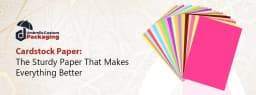
Have you ever held a sturdy business card or a beautiful wedding invitation and wondered what makes it so special? The secret is usually cardstock. It is a type of paper that is thicker and stronger than the paper you use in your printer at home. Think of regular paper as a light jacket and cardstock as a warm, sturdy coat. Cardstock sits right in the middle. It is heavier than regular paper but more flexible than cardboard. Cardstock vs. Regular Paper: What is the Difference? The main difference is the thickness and weight. Regular printer paper is very thin and flimsy. It can tear easily, and it wrinkles. Cardstock is much more durable. Here is a simple way to see the difference: 1. Hold a piece of regular paper at one corner. It will flop down. 2. Now, hold a piece of cardstock. It will stay flat. This strength makes cardstock perfect for projects that need to last. It can stand up to being handled, mailed, and displayed without being damaged. Benefits of Cardstock over Regular Paper Cardstock offers many advantages over regular paper. Here are the key benefits: 1. Superior Durability Cardstock is much thicker and stronger than regular paper. It does not tear, wrinkle, or bend easily. This makes it perfect for items that people handle often, like business cards, menus, and game cards. 2. Professional Appearance Cardstock feels premium and expensive. A thick business card or invitation made from cardstock creates a lasting impression. It shows that you care about quality. 3. Better Print Quality Cardstock holds ink beautifully. Colors look sharper and more vibrant, especially on glossy or coated finishes. Regular paper often makes ink bleed or look dull. 4. Moisture Resistance The dense fibers of cardstock resist moisture better than regular paper. It does not buckle or warp when exposed to humidity. This makes it ideal for restaurant menus and outdoor signage. 5. Structural Strength Cardstock holds its shape. It stays flat when held and stands upright when folded. Regular paper flops down and loses its structure quickly. 6. Versatility Cardstock works for countless projects, from crafts and scrapbooking to packaging and professional printing. Regular paper is too flimsy for most of these uses. 7. Eco-Friendly Options Many cardstock options are made from recycled materials or come with FSC certification. This allows you to choose sustainable options without sacrificing quality. Understanding Cardstock Weight and Thickness Cardstock comes in different thicknesses. The thickness is called the weight. There are three main ways to measure it: 1. GSM (Grams per Square Meter): This is a simple, worldwide standard. It tells you the weight of one square meter of paper. In short, higher GSM means thicker paper. This is the easiest way to compare. 2. Points (pt): This measures the paper's physical thickness. One point equals 1/1000th of an inch. Therefore, a 14pt cardstock is 0.014 inches thick. 3. Pounds (lb): This is an older system used in the US. It is a bit confusing because it depends on the size of the paper being weighed. It is better to use GSM for a direct comparison. Common Cardstock Weights and Their Uses Weight Thickness Best Used For 120-140GSM Thinner Posters, flyers, simple crafts 210-300GSM Medium Magazine covers, high-quality flyers, scrapbooking 350-450GSM Thick and sturdy Business cards, invitations, postcards, packaging For example, 80 lb cover cardstock is about 216 GSM. This is a very popular choice for making high-quality greeting cards. If you want an even sturdier card, 100 lb cover (around 270 GSM) is a great choice for business cards and invitations. Common Uses of Cardstock Cardstock is a true all-rounder! Because it is so strong yet easy to print on, people use it for many things. Business Cards: A thick business card feels professional and makes a great first impression. Invitations and Greeting Cards: Whether for a wedding or a birthday, cardstock makes the card feel fancy and special. Postcards: It is thick enough to go through the mail without bending. Scrapbooking and Crafts: It is the perfect base for photos and decorations. It holds glue, paint, and ink very well. Packaging: Many companies use cardstock for product boxes. It is sturdy enough to protect the item inside and looks great on a shelf. Menus and Brochures: Cardstock can handle being picked up and put down many times without tearing. The Right Color For Cardstock Cardstock comes in a wide variety of colors. The color you choose can change the whole look and feel of your project. Let us explore the different color options available. Color Feeling Best For White Clean, professional Business cards, flyers, invitations Ivory Elegant, classic Wedding invitations, formal stationery Black Bold, luxurious Premium business cards, packaging Red Passionate, exciting Sale flyers, Valentine cards Blue Trustworthy, calm Corporate branding, business materials Green Natural, eco-friendly Organic products, environmental brands Metallic Luxurious, shiny Premium invitations, fancy packaging Choosing the right color is important. It sets the mood and creates the right impression. Pick wisely, and your project will look amazing! Classification of Cardstock and Finishes Cardstock is not just one thing. There are many types, each with a special look and feel. By Finish Matte: This has no shine or glare. It looks elegant and is great for printing text. It is also easy to write on. Glossy: This is shiny and makes colors and photos pop. It is often used for flyers and brochures. Textured: This has a pattern on the surface, like a canvas or linen. It feels great to the touch and makes projects look very fancy. Kraft: This is a brown, natural-looking paper made from recycled materials. It is a popular choice for eco-friendly packaging and crafts. Metallic: This has a shiny, foil-like coating. It is available in colors like gold and silver and adds a touch of luxury. By Core The inside of the paper is called its "core." When you tear it, you can see the color inside. White Core cardstock has a white inside. Solid Core cardstock has the same color all the way through. This is important because it prevents ugly white edges from showing when you cut it. How to Choose the Right Cardstock for Your Project Choosing the right cardstock is easy when you consider four simple things: for sturdy items like business cards, pick heavy 350 GSM, while lighter 120 GSM works for flyers; for bright photos, choose glossy, but for elegance, pick matte, and for a fancy touch, go textured or metallic; for items handled often like menus, choose medium to heavy weight to prevent bending; and for eco-friendly projects, always select recycled or FSC-certified cardstock from well-managed forests. Here is flow sheet diagram: Printing on Cardstock at Home You can print cardstock at home, but you must be careful since thick paper can get stuck. Always check your printer's manual for its maximum weight limit, use the manual feed tray to keep paper straight and prevent jams, change your settings to "Cardstock" or "Heavy Paper" so the printer slows down and dries ink properly, and load one sheet at a time for safety. Here is flow sheet diagram: Why Choose Us for Your Cardstock Needs? Umbrella Custom Packaging is a true expert in cardstock. We know everything about weights, finishes, and textures, from sturdy 350 GSM for business cards to lighter 200 GSM for flyers. We also offer eco-friendly options like recycled and FSC-certified cardstock. Our team guides you gradually to choose the perfect material for your needs and budget. We also provide professional printing and customization services. Our advanced printers handle even the thickest cardstock with ease, delivering crisp, vibrant results every time. From packaging and invitations to custom business cards , we bring your vision to life with top-quality cardstock! Contact us today to place the order! Wrapping it Up! Cardstock is truly an amazing material. It is strong, beautiful, and versatile. Whether you need business cards, invitations, packaging, or craft projects, cardstock delivers quality that regular paper simply cannot match. It looks professional, feels premium, and lasts a long time. By understanding weights, finishes, colors, and printing tips, you can choose the perfect cardstock for any project. Remember, the right cardstock makes all the difference. So, next time you start a project, choose cardstock and watch your ideas come to life with style and strength!
We offer Packaging Boxes delivered to your door. Secure, professional, and affordable, our custom made packaging boxes are guaranteed to protect and transport your valuable items. Our devoted team is always there to serve you.













Our Secure Payment Modes
© 2026 Umbrella Packaging All rights reserved.